

The best dive sites aren’t automatically the deepest, most famous, or most dramatic. The right choice is the one that suits your certification, comfort in the water, and curiosity about what lies below.
Reefs, island settings, and wrecks each offer a different kind of dive. To compare them, look beyond the scenery: consider your recent experience, the planned route, and whether the dive matches your training and comfort. These details matter as much as what you hope to see.
This guide explains how to compare dive experiences by skill level and interest. You’ll find practical questions to ask about the site type, your readiness, and the plan for the day, so you can choose with more confidence.
Whether you’re new to diving, returning after a break, or ready to develop your skills, there’s a suitable next step. A Try Dive introduces beginners to scuba, guided Fun Dives are for certified divers, and courses with Scubadeep can support progression toward more advanced or specialized diving.
Key Takeaways
- Compare the best dive sites in Phuket by the experience you want, from reef and island scenery to wreck exploration.
- Match a dive plan to your certification, recent experience, and current comfort in the water.
- Consider how your health and interests can help shape a dive that feels rewarding and appropriate.
- Follow the dive plan and communicate openly with your guide to support a considered, comfortable experience.
- Choose between a guided Fun Dive, a Try Dive, or a course that fits your diving journey.
How to Choose the Best Dive Sites for Your Experience and Interests
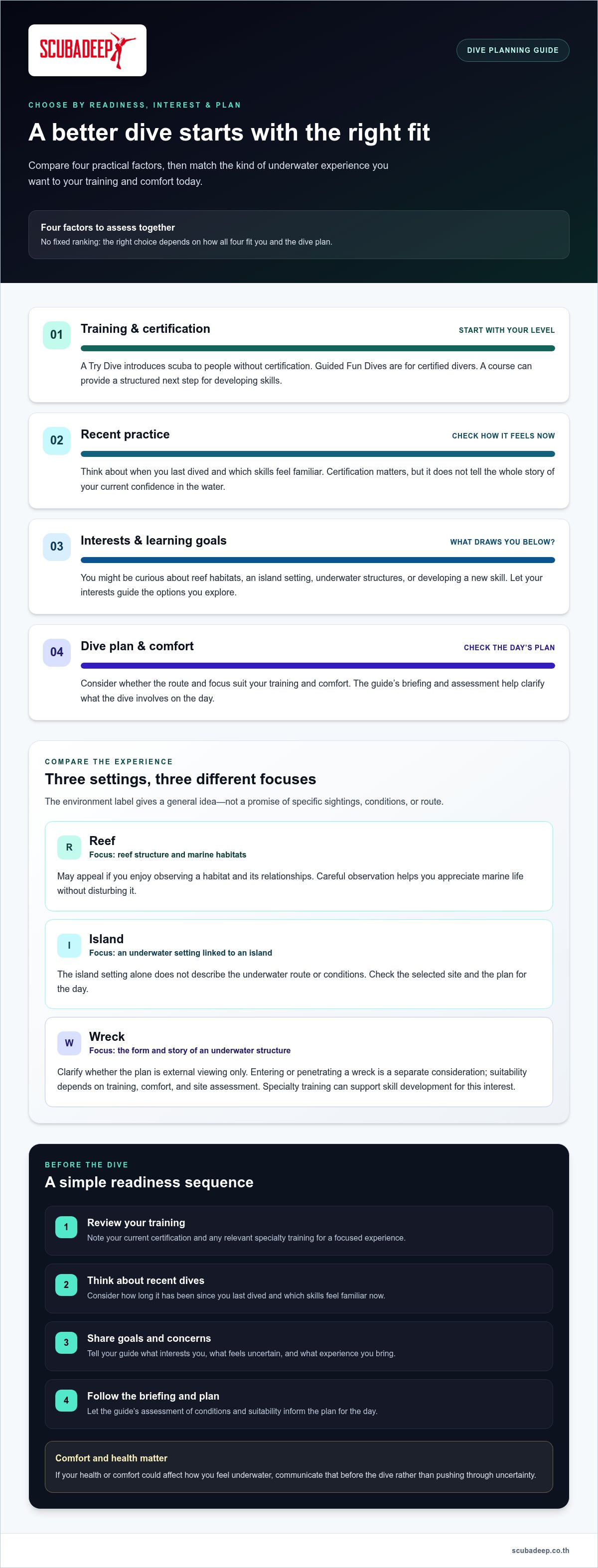
First, decide what you want from the dive: reef scenery, an island setting, wreck exploration, more confidence in the water, or an opportunity to develop your skills. Then compare that goal with your training, recent experience, and the plan for the day. The best dive sites in Phuket won’t suit every diver equally. Look for an experience that interests you without asking you to exceed your readiness.
Use this checklist when comparing options:
- Training: Is the experience an introduction for beginners, or is it for certified divers?
- Recent practice: When did you last dive, and how comfortable do you feel with your skills now?
- Interests: Are you most curious about reef habitats, island environments, underwater structures, or learning a new skill?
- Dive plan: Does the planned route and focus suit your training and comfort on the day?
Match the dive to your certification and recent experience
A Try Dive introduces scuba to people who haven’t earned a certification. Guided Fun Dives are for certified divers. Certification is important, but it doesn’t describe how recently you’ve dived or how confident you feel today. Be open about your experience and comfort when choosing a guided dive. If you’d like to build your skills, a course offers a structured next step.
Choose the underwater experience you want
Consider what you’d like to focus on below the surface. Reef diving centres on a marine habitat; an island dive takes place in an island setting; and wreck diving brings underwater structures into focus. These descriptions indicate the general character of an experience, not guaranteed sightings or conditions. Your interests may also point to a learning goal, such as developing skills for wreck or deep diving through specialty training.
Destination information can provide useful background on geography and marine environments. For example, this destination reference offers context about an island marine environment. Use background reading to inform your interests, then use the actual dive plan to understand what the experience involves. Matching your interests, readiness, and the plan makes it easier to compare options.
Compare Reef, Island, and Wreck Diving Experiences
Reef, island, and wreck dives offer different ways to explore underwater. Use this comparison to narrow down what appeals to you, then consider the planned dive and your experience before deciding. No environment guarantees particular sightings or conditions.
| Experience | Main appeal | What to consider |
|---|---|---|
| Reef | Observing reef structure and marine habitats | Choose it if you’re curious about the environment and want to focus on careful observation. |
| Island | Exploring an underwater setting connected to an island destination | The dive depends on the selected site and the day’s plan, not simply the island setting. |
| Wreck | Viewing the form and story of an underwater structure | Clarify whether the plan involves external observation only. Entering a wreck is a separate consideration. |
What reef and island dives can offer
A reef dive gives you the chance to observe the shape of a habitat and the relationships within it. An island dive describes the broader setting, but doesn’t tell you what the underwater route or conditions will be. A guide can help you observe marine life attentively and avoid disturbing it. These experiences may suit divers who value scenery and habitat, while the specific plan determines what the dive involves. For travelers seeking island escapes that prioritize pristine marine settings, specialist agencies like Fiji Naturally arrange hand-picked eco-retreats and boutique island stays tailored around natural surroundings.
When a wreck dive may suit your goals
Wrecks can appeal to divers interested in underwater structures and the history they suggest. Viewing a wreck from outside is different from entering or penetrating it, so don’t assume a dive includes penetration. The appropriate plan depends on your training, comfort, and the site assessment. A Wreck Diving Course supports skill development for divers pursuing this interest, but advanced wreck training isn’t a universal requirement for every wreck experience.
Conditions and suitability can change. Compare the planned route, your experience, and the focus of the dive rather than relying on the environment label alone. Scubadeep offers guided Fun Dives for certified divers exploring reef, island, and wreck settings.
Plan a Dive Trip That Fits Your Readiness and Comfort
A rewarding dive plan starts with an honest picture of your experience today, not only the certification you earned. Use the steps below to narrow down your options among the best dive sites in Phuket, then follow the briefing and guidance for the dive. The plan for the day matters: a destination name alone can’t promise a particular itinerary or experience.
Use a simple pre-trip decision sequence
- Review your certification: Note your current certification and any relevant specialty training, especially if you’re considering a focused experience.
- Think about recent dives: Consider how long it’s been since you last dived and which skills feel familiar. A qualification doesn’t always reflect current confidence.
- Share your goals and concerns: Tell your guide what interests you, what you’re unsure about, and what experience you bring.
- Follow the dive plan: Listen to the briefing and let the guide’s assessment inform the plan for the day. Conditions and suitability are part of that assessment.
Your comfort matters, as does your health. If either could affect how you feel underwater, communicate that before the dive rather than trying to push through uncertainty. Clear, honest information helps the guide make an informed assessment and helps you decide whether the planned experience feels appropriate. For general guidance, review Thailand’s published diving regulations and follow the briefing for your trip.
Know when a refresher or further training may help
If you’ve been away from diving or feel rusty, a Scuba Refresher Review can help you revisit skills and rebuild confidence before choosing a more demanding experience. For a structured next step, an Advanced Open Water Course or specialty training in wreck or deep diving can support your progression. Training is a pathway, not a reason to select a site beyond your comfort.
Keep safety guidance in mind as you plan. Review relevant scuba diving safety advice alongside your trip briefing, and raise any questions that affect your readiness. If you’d like to refresh your skills before a guided dive, explore a Scuba Refresher Review.
Explore Guided Dive Experiences with Scubadeep
Once you’ve considered your interests and readiness, choose an experience that fits your next step. Scubadeep offers guided Fun Dives for certified divers and introductory Try Dives for people new to scuba. Both provide a way to explore underwater environments with professional support. Your training, experience, and goals help determine which option is right for you.
Choose between a guided Fun Dive and a Try Dive
A Fun Dive is for certified divers who want to keep exploring. Your certification, recent practice, and the dive plan help determine whether a particular experience is appropriate. A Try Dive introduces scuba to people who haven’t earned a certification and want to experience breathing underwater with guidance. It’s a starting point, not a substitute for certification training.
Think about what you want from the day. Are you returning to diving, looking for a guided experience, or taking your first step beneath the surface? Share your background and interests so the guide can factor them into the dive plan. Choose based on your own readiness rather than pressure or what others are doing. A considered match leaves room for curiosity while respecting your comfort and training.
Build skills for more specialized underwater experiences
Training can support your progression as your interests develop. The Open Water Course provides a path toward certification, while advanced training can help certified divers broaden their experience. Specialty courses offer focused learning in wreck diving, deep diving, and enriched-air Nitrox. Consider what you hope to learn and how it fits your future dive goals.
Guided diving and training can complement each other. A Fun Dive gives certified divers the opportunity to explore with professional support, while a Try Dive offers an introduction to scuba. If you’re drawn to a specialized environment, the appropriate course can help you build relevant skills over time. For more destination context, explore Scubadeep’s guide to dive sites and use it alongside the readiness and planning advice in this article.
Ready to take your next step? Explore Scubadeep’s guided Fun Dives or Try Dives and choose an experience that feels inviting, suitable, and right for your diving journey.
Choose a Dive That Moves You Forward
The best dive sites in Phuket are the ones that match what you want to experience with the training and comfort you bring today. Reef, island, and wreck environments each offer a different focus, but the dive plan, your recent experience, and a guide’s assessment all help determine what’s appropriate.
Before choosing, be clear about your certification, how recently you’ve dived, and what interests you most. If you’re new to scuba, an introductory Try Dive offers a guided first experience. Certified divers can consider a Fun Dive, while an Open Water Course, advanced training, or specialty courses can help build skills for future goals. Take your time, communicate openly, and choose a step that feels both exciting and manageable.
Scubadeep offers guided Fun Dives and Try Dives, alongside training from Open Water through advanced and specialty courses. Explore guided dive experiences with Scubadeep and find a welcoming next step in your scuba journey.
Frequently Asked Questions
Is a guided dive suitable for a beginner?
A beginner may be suited to an introductory Try Dive, depending on their comfort, experience, and the dive plan. Scubadeep offers Try Dives for people starting their scuba journey, while guided Fun Dives are for certified divers. Professional guidance and an assessment help determine what’s appropriate for the planned experience. Not every site or set of conditions will suit every beginner, so choose a starting point that fits your readiness.
Can I visit a wreck dive site without wreck-diving training?
Viewing a wreck from the outside is different from entering or penetrating it. Whether an external wreck dive is appropriate depends on your certification, experience, the specific dive plan, and professional guidance. Don’t assume penetration is included or suitable for every diver. If you want to develop wreck-diving skills, a Wreck Diving Course offers structured specialty training to support that progression.
How do I choose a dive site if I have not dived recently?
Start by reviewing your certification, how recently you dived, and how comfortable you feel in the water now. Share that information, along with any concerns, when planning the trip. Past certification alone doesn’t establish current readiness, and a destination’s reputation can’t replace an assessment of the planned dive. If you feel out of practice, a Scuba Refresher Review may help you revisit skills and rebuild confidence before diving.
What marine life can I expect to see on a dive?
Specific marine-life sightings can’t be guaranteed, since what you encounter varies with the site, conditions, and timing. Rather than planning around a particular animal, approach the dive as a chance to observe the underwater environment as it is. A guide can help you notice habitats and observe responsibly. This keeps expectations realistic and makes the experience rewarding even when a hoped-for sighting doesn’t happen.
Do I need certification to join a guided dive?
It depends on the experience. Scubadeep offers Try Dives for people new to scuba and guided Fun Dives for certified divers. A Try Dive is an introduction, not a scuba certification. Choose according to your training, comfort, and the planned dive, and follow professional guidance on what’s appropriate. If you’re interested in becoming certified, an Open Water Course provides a training pathway for beginners.
What should I consider before booking a dive trip?
Consider your certification, recent diving experience, preferred underwater environment, and comfort level. Share relevant experience and concerns during planning, then follow the professional briefing and dive plan. A destination, wreck, or set of conditions won’t suit every diver, so let your readiness and the guide’s assessment inform your choice. If you’ve been away from diving, consider whether a Scuba Refresher Review would help you feel prepared.