

What if the best way to enjoy the King Cruiser isn’t to get closer, but to know when to keep your distance? King Cruiser wreck diving offers a memorable look at a large wreck that has become a marine habitat. Depth, changing visibility and possible currents make preparation part of the experience.
It’s reasonable to wonder whether your certification and recent dive experience are enough. The wreck’s upper structure has deteriorated, so dives focus on the exterior rather than entering it. The site ranges from about 18 metres at the top to around 32 metres at the seabed, making it better suited to certified, experienced divers than to beginners or try dives.
This guide will help you set realistic expectations, prepare responsibly and decide whether a guided dive fits your experience. You’ll learn what conditions can mean underwater, what to expect from a guided dive day and how Scubadeep’s guided King Cruiser Fun Dive can support your exploration. If you want to build specialist skills, the Wreck Diving Course offers a progression path.
Key Takeaways
- King Cruiser wreck diving Phuket combines exploration of a historic wreck’s exterior with the marine life around it.
- Consider your certification, recent experience, comfort underwater and the conditions on the day when deciding whether the dive suits you.
- Prepare by assessing your readiness and equipment, then share your experience and concerns during the pre-dive briefing.
- A guided King Cruiser Fun Dive offers support and a clear focus on responsible diving.
- If you want to develop specialist wreck skills, a Wreck Diving Course can be a next step in your progression.
What makes the King Cruiser Wreck a distinctive dive?
The King Cruiser is a submerged passenger ferry and a wreck-diving site where divers observe the vessel from the outside. The ferry sank on May 4, 1997, after striking nearby Anemone Reef. Its history gives the site a human story as well as an underwater one. The MS King Cruiser reference provides further background on the vessel and its sinking.
A wreck’s appeal comes from more than its outline. The vessel’s large forms, openings and changing structure create visual points of interest, while the surrounding marine life can make each visit feel different. The King Cruiser has become a habitat for marine life, though sightings vary from dive to dive. Visibility and other underwater conditions also change, so don’t assume two visits will look or feel the same.
What can divers expect from a wreck dive?
Expect to observe a vessel resting underwater and take in its shape, scale and details from the exterior. A guide can point out features along the planned route while you focus on buoyancy, your buddy and the dive plan. This is an exterior tour, not an invitation to enter the wreck. The upper decks have collapsed, and penetration is considered unsafe, so responsible exploration means staying outside.
Why does the wreck attract experienced divers?
The site brings together historical interest and the challenge of exploring a substantial underwater structure. The wreck’s scale and changing contours reward careful observation, but also call for controlled movement and awareness of your position. Keeping a respectful distance helps you avoid contact with the structure and marine life. The experience is not just about seeing a sunken vessel. It’s about exploring thoughtfully, with attention to the guide, your dive plan and the conditions.
Conditions affect what’s visible and how the dive feels, so no two visits are identical. Approach the site with curiosity, follow the briefing and adapt your exploration to the conditions on the day.
Is King Cruiser wreck diving suitable for your experience level?
There isn’t one answer for every diver. Suitability depends on your certification, how recently you’ve dived, your comfort underwater and the conditions on the day. The wreck ranges from about 18 metres at the top to around 32 metres at the seabed, so divers need to be comfortable managing depth and monitoring their dive plan. The guide will explain the planned route and current conditions during the briefing.
Be candid about your recent experience. A certification card alone doesn’t show how you feel in the water today. If you’ve had a long break, feel uncertain about depth or are working to regain buoyancy control, say so before the dive. This gives the team useful context for discussing whether the plan fits your experience and comfort.
What skills help you feel prepared?
Stable buoyancy helps you maintain a deliberate distance from the wreck. Controlled ascents and awareness of your buddy, guide and surroundings also support a calm dive. Consider whether these skills feel dependable, not just familiar. Share concerns during the briefing, and listen closely to the route, depth plan and signals. For broader safety context, review Thailand travel and diving safety guidance.
A wreck specialty course can help build knowledge and skills for exploring wrecks responsibly. If you want structured progression, Scubadeep’s Wreck Diving Course is one option for developing specialist skills.
Why should divers avoid entering the wreck?
Entering a wreck creates an overhead environment, where a direct ascent to the surface may be blocked. That adds risks involving navigation, entanglement and limited exit routes, and requires specific training and equipment. Treat a guided recreational dive as an exterior exploration, not wreck penetration. Stay outside unless you’re undertaking appropriate training within its defined scope, and follow the dive team’s instructions.
If your experience and comfort match the plan, a guided dive can provide support while you focus on your skills and surroundings. Explore guided King Cruiser diving and wreck training.
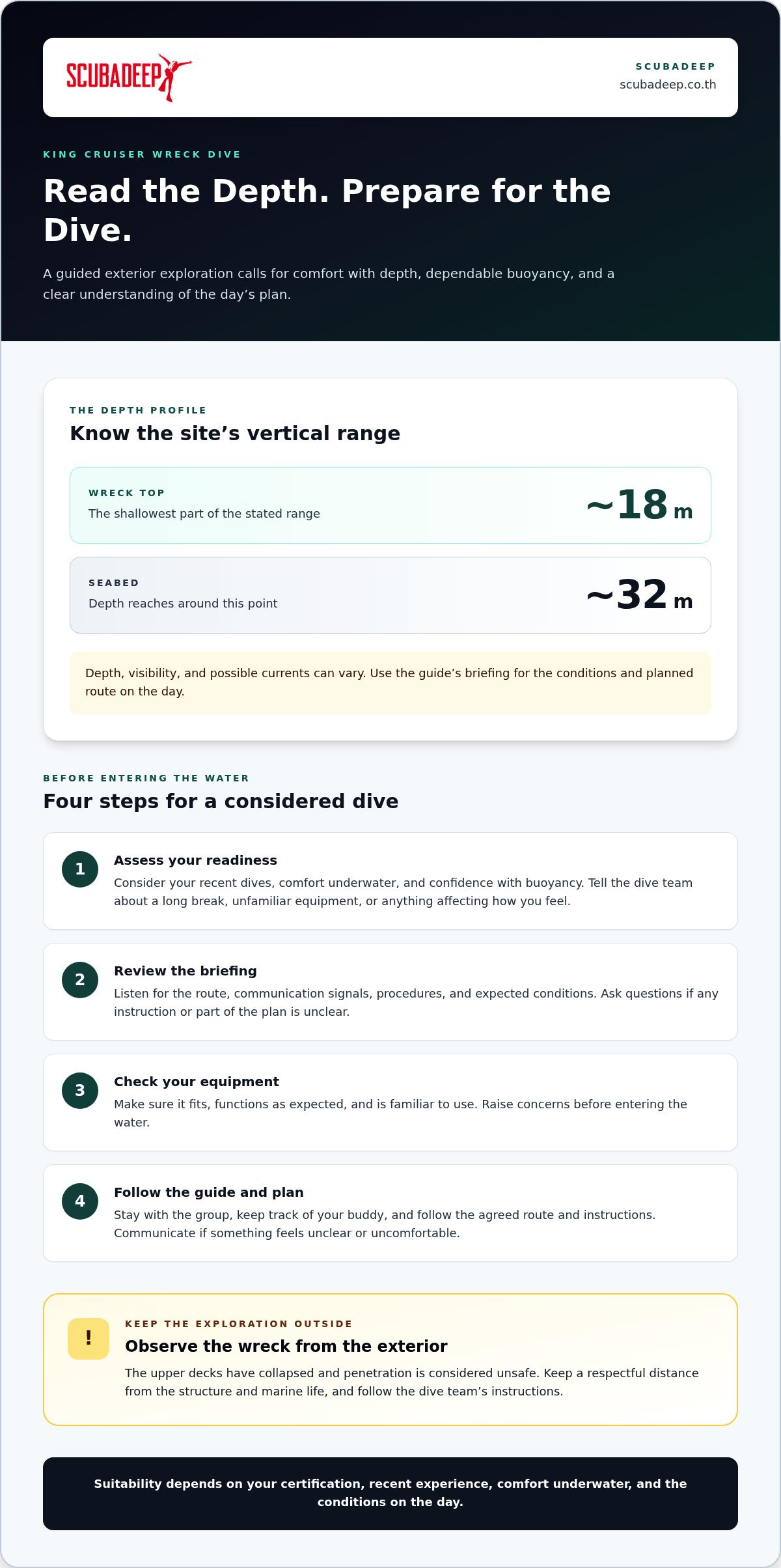
How to prepare for a King Cruiser wreck dive
Good preparation helps you focus on the dive instead of sorting out questions underwater. For King Cruiser wreck diving Phuket, use these steps to arrive ready, understand the plan and explore responsibly.
- Assess your readiness. Consider your recent dives, comfort underwater and confidence with buoyancy. Tell the dive team about a long break, unfamiliar equipment or anything that could affect how you feel during the dive.
- Review the briefing. Listen for the planned dive, communication signals, procedures and expected conditions. Conditions can vary, so rely on the guide’s briefing for the day rather than assuming details from a previous visit will apply.
- Check your equipment. Make sure your equipment fits and functions as expected, and that you know how to use it. Raise concerns before entering the water, not after the group has descended.
- Follow the guide and plan. Stay with the group, keep track of your buddy and follow the agreed route and instructions. If something feels unclear or uncomfortable, communicate rather than improvising.
What should you cover in the dive briefing?
The briefing should give you a clear understanding of the plan, communication, procedures and expected conditions. Share your experience and concerns, including any uncertainty about your equipment or comfort level. Ask questions if a signal, instruction or part of the plan isn’t clear. Take the time to understand the plan before entering the water. A clear briefing supports sound decisions throughout the dive.
How can you dive around a wreck responsibly?
Keep your buoyancy controlled and leave space between yourself and the structure. Contact can damage the wreck, disturb marine life or affect your control in the water. Don’t touch or remove objects, and avoid stirring sediment that can reduce visibility for other divers. Observe marine life without disturbing it. Stay within the agreed dive plan and follow the guide’s directions, even if a feature catches your attention.
These habits help protect the site and keep the dive focused on observation rather than unnecessary contact. For guided support at the wreck, explore Scubadeep’s guided King Cruiser Fun Dive.
Plan your King Cruiser wreck dive with guided support
A guided dive can suit certified divers who want to explore the King Cruiser with a dive team’s support and a briefing focused on the plan and conditions. Preparation still matters: consider your recent experience, be open about any concerns and arrive ready to follow the agreed dive plan. Guidance supports your decisions underwater, but it doesn’t replace personal readiness or responsible diving.
Scubadeep offers a guided King Cruiser Fun Dive for divers whose goal is to experience the site. Explore the wreck from the outside with guidance while applying the skills you already have. The pre-dive briefing explains the plan and sets expectations for the day.
Choose between a guided dive and wreck training
A Fun Dive is an underwater experience. A course is a learning path for divers who want to develop focused knowledge and skills. If you want to explore with guidance, consider Scubadeep’s King Cruiser Fun Dive. If your goal is to build specialist wreck-diving skills, the Wreck Diving Course is the more relevant progression option. Choose according to your experience and learning goals, not simply the appeal of the site.
Take the next step with Scubadeep
Before deciding, consider what you want from the dive and what would help you feel prepared. The King Cruiser wreck diving Phuket experience is best approached with realistic expectations, an open conversation during the briefing and a commitment to follow the guide. If you’re planning further skill development, Scubadeep’s Advanced Open Water Course and Wreck Diving Course offer options to continue your training.
Explore the guided King Cruiser dive and wreck training options, then choose the next step that fits your goals and readiness.
Make Your Next Dive a Thoughtful One
The King Cruiser is memorable for more than the shape of a sunken vessel. Its story, exterior structure and changing marine life reward careful observation, while a good experience starts with realistic expectations. For King Cruiser wreck diving Phuket, consider your certification, recent experience and comfort in the water, then use the dive briefing to understand the plan and conditions for the day.
Responsible wreck diving means maintaining buoyancy, respecting the structure and marine life, and following your guide. If you want to explore with guidance, Scubadeep offers guided Fun Dives at the King Cruiser Wreck. If you’re looking to build focused wreck-diving skills, the Wreck Diving Course offers a learning path to consider.
Choose the option that fits your goals and readiness. Explore guided King Cruiser dives and wreck training with Scubadeep, and take your next step toward a more confident, considered dive.
Frequently Asked Questions
How deep is the King Cruiser wreck?
The wreck’s uppermost section is approximately 18 metres deep, while the deepest point reaches about 32 metres on the seabed. Your actual depth depends on the dive plan and the guide’s instructions, so stay within your training and personal limits. Depth is one reason to discuss your experience and comfort during the briefing, then monitor your depth throughout the dive rather than relying on estimates alone.
Can beginners go King Cruiser wreck diving?
King Cruiser wreck diving Phuket is generally suited to certified, experienced divers, not beginners or try dives. Your certification, recent dive experience, comfort underwater and the conditions on the day all matter. The depth and open-water environment call for sound buoyancy and situational awareness. Be candid with the dive team about your experience, and follow its guidance when deciding whether the planned dive is appropriate for you.
What marine life can you see around the King Cruiser wreck?
Divers may encounter schools of fish and varied marine life around the wreck, which has become an underwater habitat. Sightings aren’t guaranteed, and the scene can differ between dives because conditions and animal activity change. Take time to observe without touching or disturbing anything. Keep a respectful distance from the structure and marine life, and let the guide help you notice details while you remain focused on buoyancy and your buddy.
Is wreck penetration included in a guided King Cruiser dive?
No. A guided recreational dive is an exterior exploration, not an invitation to enter the wreck. The upper decks have collapsed, and penetration is considered unsafe. Overhead environments require specific training and introduce additional risks, so stay outside and follow the guide’s instructions. Scubadeep’s guided King Cruiser Fun Dive is an exterior guided experience. Divers seeking focused wreck skills can consider its Wreck Diving Course.
What should I bring for a King Cruiser wreck dive?
Bring your usual personal dive essentials, such as your mask, dive computer and any equipment you prefer to use, along with swimwear, a towel and drinking water for the day. Pack your certification details and logbook if you use them, and arrive ready to discuss your recent experience and any concerns. Follow the dive team’s pre-dive instructions about equipment and preparation.
Do I need a Wreck Diving Course to dive the King Cruiser?
A Wreck Diving Course isn’t automatically required for every guided exterior dive, but the site still calls for appropriate certification, experience and comfort for the planned conditions. The guide and dive team will explain the dive plan and discuss whether it fits your readiness. If you want to build specialist knowledge and skills for wreck exploration, Scubadeep’s Wreck Diving Course offers a focused learning option.