

The lowest course quote may not be the best value. The open water certification Thailand cost can be hard to compare when different prices cover different parts of the training, equipment, or trip expenses.
Comparing prices before booking is sensible, especially when you’re planning around travel costs. But a clear breakdown matters just as much as the headline figure. This guide explains what can affect the total, which inclusions and possible extras to check, and what to ask about course standards, instruction, and safety procedures.
You’ll also find a practical way to compare quotes on equal terms, including questions about learning materials, confined-water practice, equipment, open-water training, certification documents, transport, and site fees. Scubadeep offers an Open Water Course, but confirm current rates and package details directly. Asking the same questions of each provider helps you assess the full value of a course without letting a low quote make the decision for you.
Key Takeaways
- Separate the quoted course fee from your full Thailand trip budget so travel and personal expenses don’t blur the comparison.
- Use the open water certification Thailand cost checklist to compare course quotes by training format, inclusions, exclusions, and booking terms.
- Request a written quote, then sort each possible charge into confirmed costs, optional extras, or personal travel expenses.
- Before paying, clarify the training standards, safety approach, schedule, and any terms that may need reconfirming closer to your course.
Open Water certification Thailand cost: what does the course fee cover?
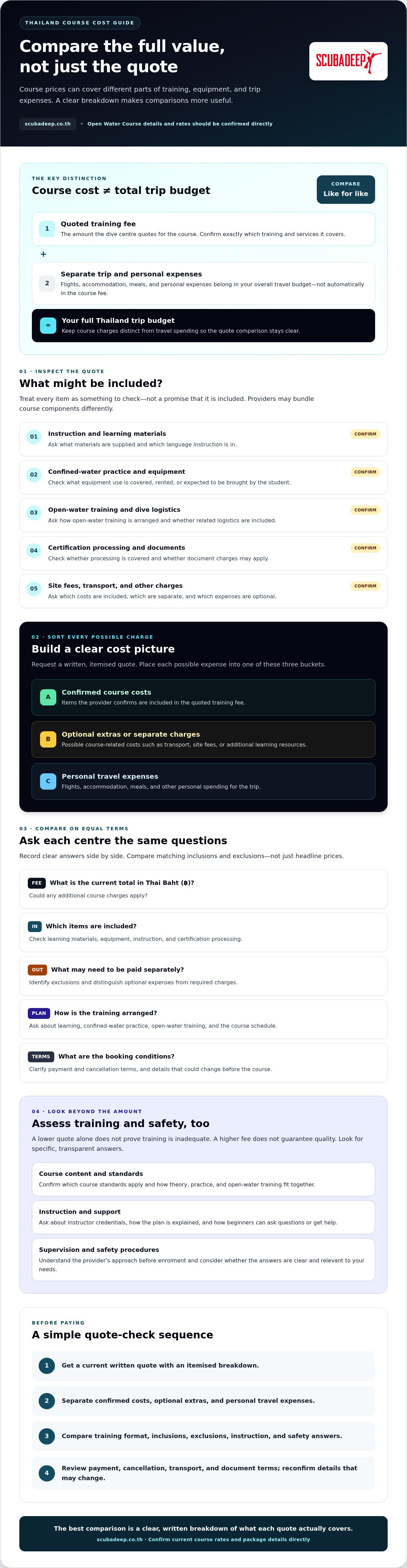
What does an Open Water course fee actually pay for? Dive centres may bundle training and related items differently, so the headline quote won’t tell you whether two courses offer the same value. To compare open water certification Thailand cost meaningfully, first separate the quoted training fee from your full trip budget.
The training fee is the amount a dive centre quotes for its course. The Open Water Diver certification involves theory, confined-water practice, and open-water training, but quotes may differ in the materials or services they include. Ask each centre for a current, itemised breakdown before booking. Scubadeep offers an Open Water Course; confirm its current rate and package details directly.
Use this list as a set of items to check, not a promise that they’re included:
- Instruction and learning materials
- Equipment use and confined-water training
- Open-water training and related dive logistics
- Certification processing or documents
- Any site, transport, or other fees
Two course quotes may not cover the same items, even if both describe the same certification. Check each inclusion and exclusion before deciding which quote offers better value.
Separate the course fee from your Thailand trip budget
Your course quote is only one part of your travel spending. Flights, accommodation, meals, and personal expenses may belong in your overall budget, but they aren’t automatically included in a course fee. Transport or site fees may need separate confirmation too. List these as possible expenses, then check which apply to your plans and whether the centre includes any of them.
Check what the quoted course price includes
Ask the dive centre to confirm in writing whether learning materials, equipment use, instruction, and certification processing are covered. Request a clear list of exclusions as well, and check payment, cancellation, transport, and document terms before paying. Don’t assume an item is included because another provider bundles it into its quote. A written breakdown makes it easier to compare course costs and plan the rest of your trip.
Compare Open Water certification costs by course content and training standards
A fair comparison starts with the details behind each quote, not just its total. Ask every dive centre the same questions and record the answers in the checklist below. It doesn’t assume what a course includes; the provider’s answers should fill in each row. This makes it easier to compare the open water certification Thailand cost across different training options.
| Compare | Ask the dive centre |
|---|---|
| Fee | What is the current total in Thai Baht (฿), and could any additional course charges apply? |
| Included items | Which learning materials, equipment, instruction, and certification-processing items are covered? |
| Exclusions | What might I need to pay for separately, and which expenses are optional? |
| Training format | How are learning, confined-water practice, and open-water training arranged? |
| Booking terms | What are the payment and cancellation terms, and what details could change before the course? |
Compare matching inclusions and exclusions, not just headline prices. Clear written answers help you see whether price differences reflect the training format, equipment arrangements, or charges left out of one quote.
Compare the learning and equipment details
Ask whether learning materials and equipment are supplied, rented, or expected to be brought by the student. Confirm the language of instruction and how beginners can ask questions or get help with unfamiliar material. Check whether extra learning resources or certification-processing charges apply. These answers help you prepare and identify costs beyond the quoted fee.
Evaluate instruction and safety alongside price
Ask how the provider explains the training plan, supervision, and safety procedures before enrolment. Confirm instructor credentials and which course standards apply, then consider whether the answers are clear and relevant to your needs. A lower quote alone doesn’t prove that training is inadequate, and a higher fee doesn’t guarantee quality. Look for specific, transparent answers rather than using price as a measure of safety.
For general trip-planning information, consult the Tourism Authority of Thailand. If you’re considering Scubadeep’s Open Water Course, ask Scubadeep about course details and confirm current rates, inclusions, and booking terms directly.
Build your complete certification budget and avoid surprise charges
Turn each course quote into a budget you can compare and plan around. Keep the training fee separate from possible extras and personal travel costs. Don’t treat an unconfirmed item as included.
- Request a written quote. Ask for the current course fee in Thai Baht (฿), an itemised breakdown, and details of any additional charges.
- Verify the inclusions. Confirm exactly what the fee covers, including any learning, equipment, training, or certification items listed by the provider.
- List exclusions. Note confirmed extra charges separately from optional expenses and travel costs such as flights, accommodation, meals, and personal spending. Include transport only if it applies to your plans and isn’t explicitly covered.
- Compare totals. Add confirmed course charges for each provider, then review optional and personal costs as separate budget lines. This gives you a clearer picture without assuming every expense applies.
Ask about payment, cancellation, rescheduling, and refund terms before booking. Find out what happens if weather, schedule changes, or personal circumstances affect the plan. Keep the answers in writing so you can compare providers consistently.
If you’re weighing an Open Water Course with Scubadeep, ask Scubadeep for current course details, including a written quote, inclusions, and any additional charges.
Plan around timing and personal requirements
Confirm the course schedule and how much availability you’ll need directly with the dive centre before arranging the rest of your trip. Ask whether there’s health, swimming, or other prerequisite information to review before enrolment, and clarify what to do if your circumstances change. For general independent diving-safety information, consult Divers Alert Network (DAN); don’t assume any particular safety or insurance service is included in a course quote.
Once you have written answers, keep a simple record of each provider’s quoted fee, confirmed charges, optional expenses, and personal travel costs. This makes your overall open water certification Thailand cost easier to estimate and helps prevent a low headline fee from obscuring unanswered questions.
Choose an Open Water course in Thailand with confidence
The right course is one you understand before you book. Compare the full open water certification Thailand cost alongside the training plan, the provider’s answers to your safety questions, and whether the schedule suits your trip. A low quote isn’t automatically a poor choice, just as a higher one doesn’t guarantee a better fit.
- Clear total: Know the current fee in Thai Baht (฿) and any additional confirmed charges.
- Written inclusions and exclusions: Understand what the quote covers and what it doesn’t.
- Confirmed standards: Ask which course standards apply and how the training is structured.
- Safety approach: Find out how supervision and safety procedures are explained.
- Suitable schedule: Confirm the course dates and the availability you’ll need.
Match the course to your goals and readiness
An Open Water certification course is structured training, distinct from a one-time introductory dive. Before booking, tell the provider about your experience and ask questions that will help you understand the learning process. If you’re exploring what comes after beginner training, read “Advanced Diving Course Thailand: Your Guide to Professional Skill Progression in 2026.” For practical safety guidance, see “15 Essential Scuba Diving Safety Tips: The Ultimate Professional Checklist.”
Make your booking decision with verified details
Before paying, review the written quote alongside the schedule, inclusions, exclusions, and payment, cancellation, rescheduling, and refund terms. Resolve unanswered questions about costs, instructor credentials, course standards, or safety procedures with the provider first. Closer to the course, reconfirm the schedule, what to bring, and any details that may have changed.
Scubadeep offers an Open Water Course. Ask the centre directly about current course details and its quote. A clear conversation helps you make a considered choice, with the training and budget understood before your underwater adventure begins.
Choose your course with clarity and confidence
The open water certification Thailand cost is only one part of your decision. Compare written quotes on the same basis, separate course charges from personal travel spending, and confirm inclusions, exclusions, training standards, safety procedures, and booking terms before paying.
A clear quote helps you plan, but the right course should also fit your goals and schedule. Ask the dive centre about current course details and raise questions about instruction or safety before booking. Reconfirm time-sensitive details closer to your course.
Scubadeep offers an Open Water Course and further scuba courses, with scuba safety education alongside its training services. For current rates and inclusions, ask Scubadeep about its Open Water Course and current inclusions. You’ll be better prepared to compare your options and plan your next step with confidence. The underwater world is waiting, and a thoughtful start can make the experience all the more rewarding.
Frequently Asked Questions
How much does Open Water certification cost in Thailand?
The cost varies by dive centre and by what its course package covers. For an accurate open water certification Thailand cost, request a current quote in Thai Baht (฿) and check whether it includes training-related items or lists them separately. Scubadeep offers an Open Water Course, but confirm its current rate and package details directly. Compare written quotes on the same basis rather than relying on a headline fee alone.
What is usually included in an Open Water course fee?
Course fees may cover elements such as instruction, learning materials, confined-water practice, open-water training, equipment use, or certification processing, but inclusions vary by provider. Treat these as questions to ask, not guaranteed features of every course. Request an itemised quote that identifies what the fee covers and what costs extra. This helps you understand the training package before booking and avoid comparing offers that include different items.
Are equipment rental and learning materials included in the course price?
They may be included, charged separately, or handled another way, depending on the provider’s package. Ask whether equipment is supplied for use, available to rent, or something you need to bring. Confirm whether learning materials are covered and whether any additional learning or certification-processing charges apply. Get the answers in writing before paying so you can include confirmed extra charges in your budget.
Can extra charges apply after I book an Open Water course?
Additional charges may apply if an item is excluded from the quoted fee or your booking circumstances change. Before paying, ask for a written list of included items, exclusions, and any possible additional charges. Confirm payment, cancellation, rescheduling, and refund terms, including what happens if weather or personal circumstances affect the plan. Recheck details that may change closer to the course rather than assuming the original quote covers everything.
How can I compare scuba certification prices between dive centres?
Ask each dive centre the same questions, then compare the written answers alongside the quoted fee. Check inclusions, exclusions, training format, learning and equipment arrangements, course standards, instructor credentials, safety procedures, schedule, and booking terms. Separate confirmed course charges from optional expenses and personal travel costs. A lower headline price may reflect different inclusions, so assess the complete offer and how clearly the provider explains it.
Is a cheaper Open Water course in Thailand still a safe choice?
A lower fee alone doesn’t show whether a course is safe or unsuitable, and a higher fee doesn’t guarantee quality. Ask how instruction, supervision, and safety procedures are explained, and confirm instructor credentials and course standards directly with the provider. If any answer is unclear, ask follow-up questions before paying. Choose based on transparent information, suitable training, and your confidence in the provider’s responses, not price alone.