

What if the hidden hazard that once claimed a massive ferry is actually the key to unlocking Thailand’s most vibrant marine sanctuary? Known locally as Hin Jom, Anemone Reef is a submerged pinnacle that demands respect and precision from every diver who visits. It’s natural to feel a bit apprehensive about the strong open-ocean currents or wonder if your current certification level is enough to safely explore a site that drops to 25 meters. You don't want to miss the camouflaged macro life while you're focused on managing your buoyancy in a surge.
This Anemone Reef dive guide is designed to transform that uncertainty into confidence. We'll explore the unique topography of this "Sunken Rock" and provide a checklist of the incredible biodiversity waiting beneath the surface. You'll also learn which advanced training modules help you master these tactical environments. From understanding the 400 THB national park fee structure to identifying the best times for slack tide, this guide prepares you for an elite underwater experience. We'll show you how to navigate the limestone slopes and find the rare species that make this site a premier destination for serious explorers.
Key Takeaways
- Understand the unique topography of this submerged limestone pinnacle and why its specific depth profile requires precise buoyancy control.
- Use this Anemone Reef dive guide to identify high-density marine life zones, from the resident clownfish in the anemone fields to visiting leopard sharks.
- Learn the tactical requirements for managing unpredictable Andaman currents and the certification levels necessary for a safe, enjoyable exploration.
- Discover how specialized training like the Advanced Open Water or Deep Dive courses can help you unlock the most remote sections of the reef.
- Get up-to-date logistical information on Thailand’s national park fees and how to time your visit for the best underwater visibility.
The Unique Ecology of Anemone Reef
Anemone Reef, known locally as Hin Jom, is a stunning submerged limestone pinnacle located within Thailand’s protected national marine park system. Unlike nearby islands, this site doesn't break the surface, which makes it a hidden, high-density sanctuary for marine life. The reef earned its name from the dense, vibrant blankets of sea anemones that cover its upper rock sections. When you descend, the visual impact is immediate. Thousands of swaying tentacles create a "shimmering" effect across the rock face. This unique visual signature is a primary reason why this site is a centerpiece of any comprehensive Anemone Reef dive guide.
A Submerged Pinnacle Formation
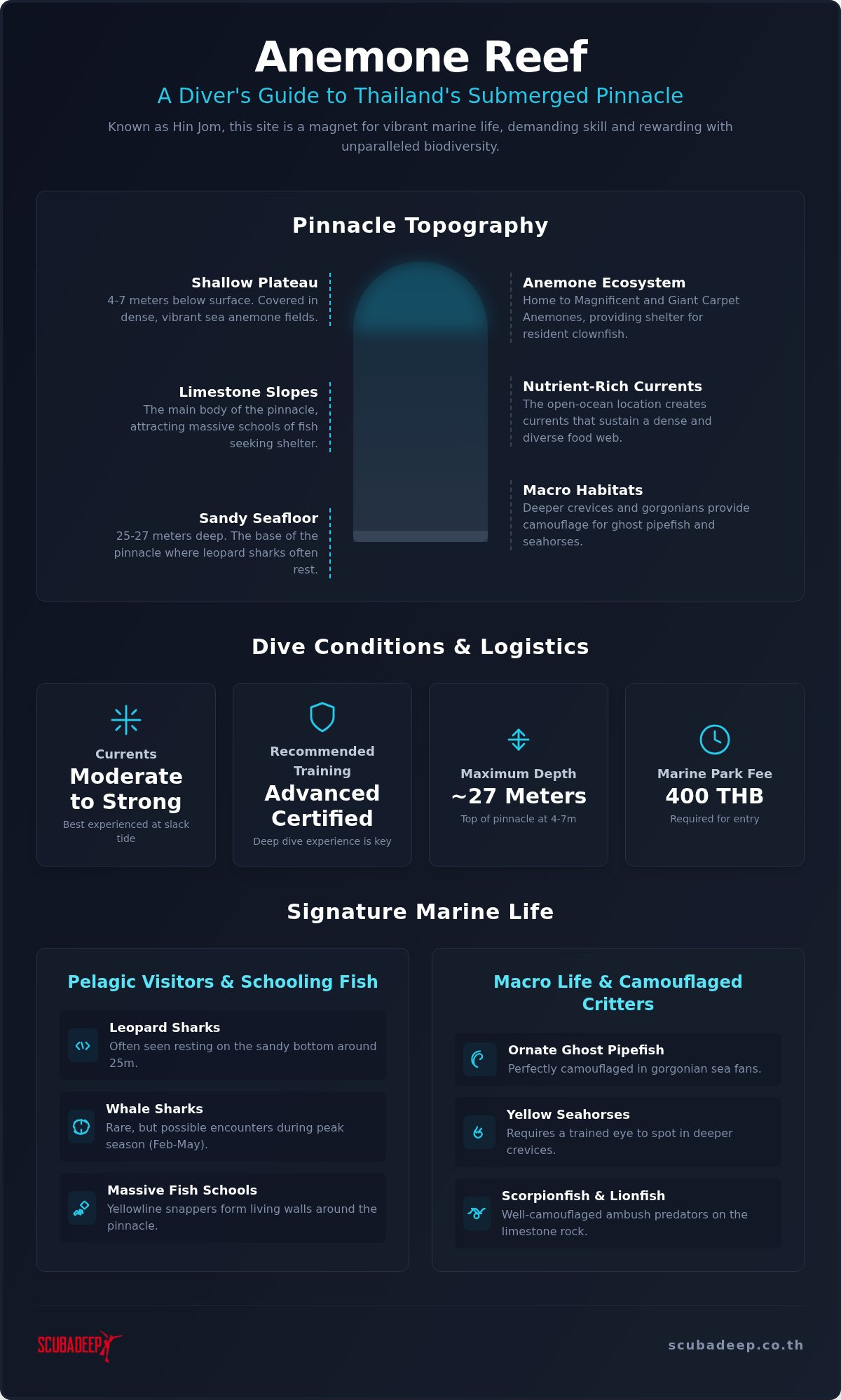
The geological structure of the reef is a dramatic limestone formation rising from a sandy seafloor at approximately 25 to 27 meters. This pinnacle tapers significantly as it reaches toward the sun, eventually forming a plateau just 4 to 7 meters below the surface. Because it's an isolated structure in the open Andaman Sea, it acts as a natural magnet for life. Large pelagic species and massive schools of yellowline snapper are frequently drawn to its solitary presence. They seek shelter or hunting grounds in the nutrient-rich currents that sweep past the rock, making the site a tactical masterpiece of nature.
The Symbiotic World of Sea Anemones
The upper portions of the pinnacle are dominated by two primary species: the Magnificent Anemone and the Giant Carpet Anemone. These creatures provide the foundation for a complex ecosystem that defines the Anemone Reef dive guide experience. You'll find specific residents thriving here:
- Magnificent Anemones (Heteractis magnifica): Often seen in vibrant shades of purple, green, or red, these anemones cluster together to cover entire boulders.
- Giant Carpet Anemones (Stichodactyla gigantea): These sit lower on the reef, providing a textured, wavy landscape for smaller inhabitants.
Symbiosis at Anemone Reef is a biological partnership where anemonefish receive protection from predators within stinging tentacles while providing the anemone with nutrients and defense against polyp-eating fish. The Unique Ecology of Anemone Reef ensures that even the smallest residents contribute to the health of the entire pinnacle, creating a balanced environment that has thrived for centuries.
Signature Marine Life Encounters
The biological density at this site is staggering. While larger reef systems often require long swims to find diverse species, this pinnacle concentrates life into a vertical sanctuary. Our Signature Marine Life Encounters are defined by this compact diversity. You'll observe a clear distinction between the permanent residents and the transient visitors that use the reef as a tactical waypoint. The pinnacle also functions as a vital cleaning station. Look closely to see cleaner wrasse and butterflyfish tending to larger groupers or visiting trevally. These interactions change with the seasons; peak plankton months, typically from February to May, often draw the ocean's largest filter feeders to the area.
Macro Life and Camouflaged Critters
Finding the small stuff requires a trained eye and excellent buoyancy. This Anemone Reef dive guide recommends scanning the deeper crevices for Ornate Ghost Pipefish and yellow seahorses. These critters blend perfectly with the surrounding gorgonians and soft corals. You'll also find a high variety of nudibranchs, which thrive on the nutrient-rich currents hitting the rock face. Watch your hand placement near the limestone; well-camouflaged scorpionfish and bearded lionfish are common residents that rely on their stealth to hunt. Spotting these hidden gems is much easier when you're moving slowly and staying observant.
Pelagic Visitors and Schooling Fish
The water column surrounding the pinnacle is rarely quiet. Massive schools of yellowline snappers often form a living wall that circles the rock, occasionally parting to reveal hunting bluefin trevally. If you descend toward the sandy perimeter at 25 meters, keep an eye out for leopard sharks resting on the bottom. While they're the most common large visitor, lucky divers might encounter a whale shark passing through during the high season. Seeing these giants in such a concentrated area is a highlight for anyone on a Scubadeep fun dive trip. We recommend staying steady in the current to let the schools drift naturally around you.
Diving Conditions and Technical Requirements
Mastering the environment at this site requires more than just basic certification. Because the pinnacle is isolated in the open sea, it's prone to moderate or even strong currents. These conditions are what bring the nutrient-rich waters that sustain the reef, but they demand technical awareness. This Anemone Reef dive guide emphasizes that while Open Water divers can visit the site, the 25-27 meter depth at the base makes it better suited for those with higher-level training. You'll need to be comfortable with the possibility of a "negative entry," where you descend immediately upon hitting the water to avoid drifting off the site.
Managing Currents and Visibility
Visibility at the reef typically ranges from 15 to 30 meters, depending on the tidal cycle and seasonal plankton blooms. High tides generally bring clearer water from the Andaman Sea, while outgoing tides might reduce clarity slightly. If you encounter a strong current, don't fight it. A professional pro-tip is to use the massive limestone structure as a natural shield. By staying close to the rock on the leeward side, you can enjoy a calm "shadow" even when the current is ripping just a few meters away. This tactic allows you to observe the macro life without exhausting your air supply.
Depth and Buoyancy Considerations
The topography of the reef dictates a specific multi-level dive profile. You'll typically start at the deepest point around 25 meters to look for leopard sharks before beginning a slow, upward spiral around the pinnacle. This method maximizes your bottom time and ensures you reach the shallow plateau for your safety stop. Perfect buoyancy is non-negotiable here. The blankets of sea anemones are delicate, and even a minor kick or touch can damage the ecosystem. You must maintain a steady horizontal trim to navigate the tighter sections of the rock face safely.
If you're looking to build the skills needed for these more challenging pinnacle sites, we recommend leveling up with an Advanced Open Water Course to gain experience in deeper, more dynamic environments. This training provides the foundation for managing task loading while exploring Thailand's most iconic submerged landmarks.
Elevating Your Experience with Specialized Training
Transitioning from shallow, protected reefs to a complex submerged pinnacle requires a significant shift in your diving mindset. Scubadeep acts as your elite mentor during this progression, moving you beyond basic skills into the realm of tactical underwater exploration. We advocate for a "skills first" approach to ensure you don't just survive the dive, but truly master the environment. Diving with a professional center that understands the specific surge and current patterns of the Andaman Sea provides a safety margin that's essential for iconic sites like this. This expert guidance allows you to focus on the beauty of the reef while we manage the technical logistics.
Advanced Skills for Pinnacle Diving
The Advanced Open Water Course is the most effective way to improve your depth management and situational awareness. This training is vital for this Anemone Reef dive guide because it prepares you for the 25-meter descent where the reef’s most impressive residents often hide. For those who want to maximize their exploration, a Deep Dive specialty provides the specific knowledge needed to manage gas consumption and nitrogen loading at the pinnacle’s base. If it's been a while since your last descent, a Scuba Refresher Review is a smart way to recalibrate your buoyancy and equipment handling before tackling dynamic open-ocean conditions.
The Role of Enriched Air Nitrox
Professional guides and experienced explorers almost exclusively use Nitrox when visiting this site. Because the pinnacle encourages a multi-level profile, Enriched Air Nitrox is a critical tool for extending your no-decompression limits. It allows for significantly more time in the 15 to 20 meter range where the density of sea anemones is highest. Spending extra time observing the symbiotic relationships on the rock face is only possible when you have the safety buffer that Nitrox provides. This Anemone Reef dive guide recommends this specialty for anyone serious about underwater photography or detailed marine life observation.
Every dive at a pinnacle is an opportunity to push your limits safely and discover something new. Whether you're ready to start your scuba journey or you want to specialize in deep environments, focusing on professional mastery unlocks the true potential of Thailand’s underwater sanctuaries. We're here to guide you through every stage of your progression with the expertise you deserve.
Master the Currents and Discover the Shimmering Reef
Anemone Reef is more than a dive site; it's a living masterclass in marine ecology and technical precision. You've seen how this submerged limestone pinnacle creates a concentrated sanctuary for everything from ornate ghost pipefish to majestic leopard sharks. Navigating the unpredictable Andaman currents requires a combination of perfect buoyancy and the right certification level. By prioritizing specialized training, you ensure that every minute spent at 25 meters is focused on discovery rather than task loading.
This Anemone Reef dive guide is your first step toward an elite underwater adventure. Scubadeep offers expert-led pinnacle tours designed for those who value safety and deep marine education. Our professional guides use high-end equipment to provide a premier experience that respects the delicate balance of the national marine park. Book your guided Fun Dive experience with Scubadeep to explore the shimmering blankets of Hin Jom with the region's most trusted mentors. We're ready to help you push your limits and see the best of Thailand's underwater world.
Frequently Asked Questions
Is Anemone Reef suitable for beginner divers?
Yes, beginner divers with an Open Water certification can explore the upper sections, but the site's exposure to open-sea currents makes it more suitable for those with some experience. Beginners should always dive with a professional guide who understands the specific surge patterns of the pinnacle. If you haven't dived in a while, we suggest completing a Scuba Refresher Review first. This ensures your buoyancy is precise enough to protect the delicate anemone fields.
What is the best time of year to dive Anemone Reef in Thailand?
The best time to visit is during Thailand's high season, which runs from November through May. During these months, you'll experience the calmest surface conditions and the clearest visibility, often reaching up to 30 meters. For those hoping to see larger pelagic visitors, the window between February and May is ideal. This is when plankton blooms are more frequent, drawing in majestic filter feeders and massive schools of predatory fish.
How deep is Anemone Reef and do I need an Advanced certification?
The reef begins just 4 to 7 meters below the surface and drops to a sandy bottom at 25 to 27 meters. While an Open Water license allows you to see the top, this Anemone Reef dive guide recommends an Advanced Open Water Course to safely explore the deeper perimeter. Having this higher certification level allows you to manage your nitrogen limits more effectively while searching for leopard sharks resting on the seafloor.
Can I see sharks at Anemone Reef?
Yes, leopard sharks are the most frequent shark species found resting on the sandy patches surrounding the reef’s base. These docile creatures are often spotted by divers who have the training to reach the 25-meter mark. Occasionally, whale sharks pass through the area during peak plankton seasons. Because the site is a protected sanctuary, you'll also see high densities of smaller predators like trevally and barracuda hunting in the water column.
What happens if the current is too strong at the reef?
If currents become too strong, professional guides will use the pinnacle's massive limestone structure as a natural current shield. By staying on the leeward side of the rock, you can enjoy a calm pocket of water even when the surrounding flow is heavy. Safety is always our primary concern. If conditions at the site are deemed unsuitable during our pre-dive assessment, we'll transition to a more protected nearby location to ensure a safe experience.
Is it possible to do a Try Dive or introductory session at Anemone Reef?
Introductory sessions like a Try Dive are generally not conducted at Anemone Reef due to its depth and dynamic conditions. This site requires a baseline of certification and buoyancy control that introductory programs don't cover. For those looking to experience their first breath underwater, we recommend calmer, shallower locations. Once you've completed your initial training, this pinnacle becomes an incredible goal for your first Fun Dive as a certified explorer.