

You might think that earning a scuba license is a simple vacation checkbox, but the reality is that your training determines your safety for every future dive you take. Choosing to get open water certified Thailand gives you access to some of the most diverse marine ecosystems on the planet, yet the sheer number of options often leads to confusion over agency standards and hidden costs. You likely want more than just a plastic card; you want the confidence to explore the deep without hesitation.
We understand that the process can feel overwhelming, especially when you're balancing physical requirements with the excitement of a tropical getaway. This guide provides a clear roadmap to mastering your skills through a globally recognized program, ensuring you avoid safety shortcuts often found in high-volume centers. We'll break down the essential three to four day timeline, explain the necessary medical prerequisites, and show you how to identify a training center that prioritizes elite mentorship over student quotas. By the time you finish reading, you'll have a professional perspective on how to transition from a curious observer to a competent, certified diver.
Key Takeaways
- View your Open Water certification as a lifelong, globally recognized credential that establishes your permanent foundation as a competent diver.
- Ensure your training meets the highest standards by choosing centers that prioritize low student-to-instructor ratios and provide comprehensive safety equipment.
- Master the essential steps to get open water certified Thailand through a methodical combination of digital knowledge development and expert-led water skills.
- Recognize the value of immediate progression to advanced training to expand your depth limits and refine your underwater buoyancy and confidence.
Understanding the Open Water Certification Standards in Thailand
Thailand provides a unique environment where high-quality instruction meets world-class marine biodiversity. When you choose to get open water certified Thailand, you aren't just buying a vacation activity; you're investing in a lifetime of underwater exploration. The training follows rigorous Open Water Diver certification standards, ensuring that every skill you master meets international benchmarks for safety and proficiency. This global recognition means your license is respected at any professional dive center across the planet.
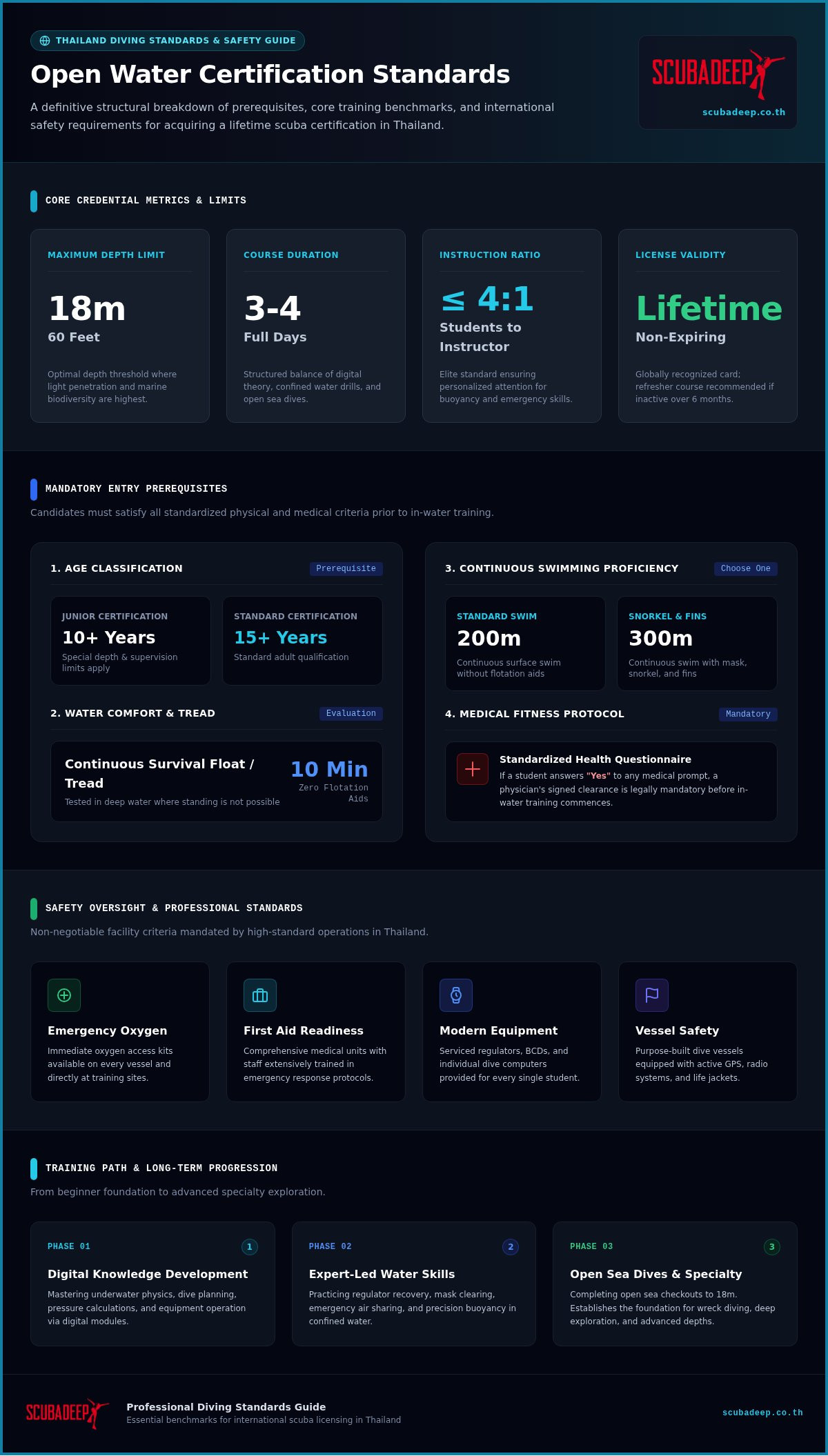
As a certified Open Water diver, your maximum depth limit is set at 18 meters (60 feet). This depth provides access to the vast majority of recreational dive sites, from vibrant coral gardens to shallow tropical reefs. It represents the sweet spot where light penetration is high and marine life is most abundant. Mastering this level gives you the foundation to enjoy these environments safely while maintaining control over your buoyancy and air consumption.
The Value of an International Scuba License
Your certification serves as a permanent passport to the underwater world. Unlike a introductory experience, this license allows you to dive independently with a certified buddy. It doesn't expire, though we recommend a refresher if you've been away from the water for more than six months. This course serves as the absolute foundation for all specialized training you may pursue later, such as wreck diving or deep exploration. It's a professional credential that signifies you've met the industry's highest safety standards.
Prerequisites and Physical Requirements
Starting your journey requires meeting a few basic standards to ensure your safety and comfort. Meeting these prerequisites is the first step for anyone looking to get open water certified Thailand with confidence. The process is inclusive but methodical, focusing on your ability to handle the aquatic environment.
- Age: The minimum age is typically 10 years for a junior certification and 15 years for the standard adult license.
- Swimming Proficiency: You must complete a 200-meter continuous surface swim or a 300-meter swim with a mask, snorkel, and fins without flotation aids.
- Water Comfort: A 10-minute continuous water tread or survival float is required to demonstrate you're comfortable in depths where you cannot stand.
- Medical Fitness: Every student must complete a standardized health questionnaire. If you answer "Yes" to any prompt, a physician's signed clearance is mandatory before training begins.
How to Choose a Premier Dive Center in Thailand
Selecting the right facility is the most critical decision when you plan to get open water certified Thailand. While many shops offer the same basic syllabus, the quality of instruction and safety oversight varies significantly across the region. You should prioritize centers that adhere strictly to Thailand's nationwide diving regulations, which mandate specific safety protocols and environmental protections. Look for centers that voluntarily restrict their instructor-to-student ratios to 4:1 or lower. This ensures you receive the personalized attention required to master complex skills like buoyancy control and emergency procedures.
Safety Protocols and Professional Standards
A premier center treats safety as a non-negotiable standard rather than an optional extra. Clear communication is vital during your training; ensure your chosen center offers multilingual instructors who can explain technical concepts in your native tongue. This reduces the risk of misunderstandings during critical training phases. Reviewing a center's scuba diving safety tips before you arrive will help you identify which operators truly prioritize their students' well-being. Professional facilities should always maintain:
- Immediate Oxygen Access: Emergency oxygen kits must be available on every boat and at the training site.
- First Aid Readiness: Comprehensive medical kits and staff trained in emergency response.
- Modern Equipment: Well-maintained regulators, BCDs, and individual dive computers for every student.
- Vessel Safety: Purpose-built dive boats equipped with GPS, radio communication, and life jackets.
The Elite Mentor Approach vs. High-Volume Schools
High-volume schools often focus on "churning" students through the system to maximize turnover. This approach can leave beginners feeling rushed or anxious. In contrast, an elite mentor approach focuses on building your confidence through patient, expert guidance. Professional centers integrate advanced training insights from the first day, preparing you for more than just a basic license. They invest in modern classroom technology and well-maintained vessels to enhance your overall experience.
If you value quality over volume, it's essential to partner with a team that acts as a consultant for your long-term diving goals. Expert guidance is particularly important for nervous beginners who need extra time to find their comfort zone underwater. You can begin your journey by exploring a professional Open Water Course designed for excellence and safety.
The Step-by-Step Process to Getting Certified
The journey to get open water certified Thailand is a structured progression designed to build your skills methodically. Most premier centers now utilize a three-phase approach that balances academic understanding with practical application. This ensures that by the time you enter the ocean, you're already familiar with your equipment and the physics of the underwater environment. This professional sequence is designed to transform beginners into confident divers within three to four days.
Theory and Knowledge Development
Modern training prioritizes your time in the water by moving academic work to digital platforms. You can complete the theoretical portion of your course via e-learning before you even arrive in the country. This phase covers essential concepts like buoyancy control, the effects of pressure, and the mechanics of your scuba system. Understanding these principles is vital, as theory ensures safety during the practical phases by teaching you how to manage your air supply and monitor your depth.
During this stage, you'll also review the Divers Alert Network safety guidelines. These standards provide the medical consensus on pre-dive fitness and mandatory surface intervals. Completing your knowledge development early allows you to focus entirely on the physical skills once you meet your instructor, making the learning process feel more like an adventure than a classroom session.
In-Water Training: From Pool to Ocean
Once your theory is complete, you'll move to confined water training. These sessions usually take place in a swimming pool or a protected shallow bay where conditions are calm. You'll master critical skills such as regulator recovery, mask clearing, and out-of-air emergency drills. These repetitions build the muscle memory necessary for safe diving. If you feel hesitant about committing to a full course immediately, you can consult a guide for beginners in Thailand to explore introductory options first.
The final phase involves four open water dives conducted over two days. During these dives, you'll apply your skills in the ocean at depths ranging from 12 to 18 meters. Your instructor will evaluate your ability to maintain buoyancy and navigate underwater while you observe the local marine life. After a final assessment of your skills and knowledge, you'll earn your official certification card, granting you the freedom to explore dive sites worldwide.
Ready to begin your underwater journey? You can book your Open Water Course today and start your e-learning modules immediately.
Planning Your Scuba Progression Beyond the Basics
Earning your entry-level license is a significant milestone, yet it's truly the start of a much larger journey. Once you get open water certified Thailand, you'll likely feel a desire to push beyond the 18-meter limit to explore deeper reefs and historical wrecks. Immediate progression isn't about rushing; it's about refining your technical proficiency while your initial training is still fresh. Moving directly into advanced modules helps solidify your buoyancy and navigational skills under the guidance of an elite mentor.
Specialty training allows you to tailor your underwater experiences to your specific interests. Whether you're drawn to the silent history of a sunken vessel or the technical advantages of breathing specialized gas blends, there's always a path to go further. The Rescue Diver Course, for instance, represents a pivotal shift in a diver's mindset. It builds ultimate confidence by teaching you to look beyond your own equipment and anticipate the needs of your buddy, transforming you into a truly self-reliant and prepared explorer.
Advanced Skills and Specialties
The transition to higher skill levels expands your access to the ocean's most exclusive sites. By enrolling in an advanced program, you'll increase your depth limit to 30 meters, unlocking deeper pinnacles and vibrant ecosystems that remain hidden to basic divers. You can learn more about this transition in our advanced diving course guide.
Specialized training like the Enriched Air Nitrox Course is one of the most popular additions for travelers. It provides longer bottom times by reducing the proportion of nitrogen in your breathing gas, which is especially beneficial during multi-dive days on Thailand's premier offshore sites. Combining these skills ensures you get the most out of every minute you spend underwater.
Building a Lifelong Connection to the Ocean
Regular diving offers more than just adventure; it serves as a powerful tool for wellness. The focused breathing and weightless environment provide unique physical and mental health advantages that few other activities can match. You can explore these further in our article on the benefits of scuba diving.
As you progress, your relationship with the marine environment will deepen. Professional training often leads to a natural involvement in marine conservation, as divers are the first to witness the health of our coral reefs. When you choose to get open water certified Thailand, you aren't just learning a hobby; you're joining a global community of advocates dedicated to exploring and protecting the blue heart of our planet.
Begin Your Journey as a Certified Explorer
Your decision to get open water certified Thailand marks the start of a permanent connection to the global diving community. By understanding international standards and prioritizing a center that offers elite mentorship over high-volume student quotas, you ensure your foundation is built on safety and expertise. It's important to remember that your initial certification is simply the doorway; the real adventure lies in refining your skills through advanced training and specialized courses that allow you to explore deeper and stay longer.
We act as consultants for your long-term goals. Our expert instructors hold high-level international certifications and maintain a relentless commitment to the highest safety protocols. We provide the full range of specialty and advanced courses to support your progression, ensuring you're never left without a clear path forward. The ocean is waiting for those who value quality instruction and professional standards.
Start your professional scuba journey with Thailand’s premier dive center and discover the hidden beauty of the deep with confidence.
Frequently Asked Questions
How long does it take to get open water certified in Thailand?
It typically takes three to four days to get open water certified Thailand when following a standard professional syllabus. This timeline includes one day of confined water training to master basic skills and two days of ocean dives to apply your knowledge in a real-world environment. If you complete the theoretical modules via digital e-learning before your arrival, you can maximize your time in the water and focus entirely on practical skill development.
Do I need to be a strong swimmer to get scuba certified?
You don't need to be a competitive athlete, but you must possess basic watermanship skills to meet international safety standards. Every student is required to complete a 200-meter continuous surface swim without aids or a 300-meter swim using a mask, snorkel, and fins. Additionally, you must demonstrate the ability to tread water or float for 10 minutes. These assessments ensure you are comfortable and capable in water depths where you cannot stand.
What is the minimum age for scuba certification in Thailand?
The minimum age to begin scuba training in Thailand is 10 years old for a Junior Open Water certification. Divers between the ages of 10 and 11 are restricted to a maximum depth of 12 meters. Once a diver reaches the age of 15; their license automatically upgrades to a standard Open Water certification. This path ensures younger explorers develop their skills safely under professional supervision before progressing to deeper recreational limits.
Is the Thai scuba certification recognized in other countries?
Yes, the certification you earn in Thailand is globally recognized and respected at dive centers around the world. Because the training follows strict international standards; your license serves as a permanent credential for underwater exploration. Whether you plan to dive in the Red Sea or the Caribbean; your digital or physical certification card will be accepted as proof of your training. It marks your transition into a lifelong community of competent, certified recreational divers.
Can I get certified if I have never tried scuba diving before?
You can absolutely get open water certified Thailand even if you have never taken a single breath underwater. The Open Water Course is specifically designed for complete beginners; starting with basic equipment familiarization in a controlled, shallow environment. Your instructor acts as an elite mentor, guiding you through each step until you feel confident. If you're nervous about the full commitment, you can start with a Try Dive to experience the sensation before enrolling.
What happens if I cannot complete the course in one trip?
If you're unable to finish all phases of your training; your instructor can issue an official referral form. This document records the specific segments you have successfully completed, such as theory or confined water sessions. You can then take this referral to any other professional dive center worldwide to finish the remaining portions of your course. This paperwork is typically valid for 12 months; allowing you to resume your education when your travel plans permit.