

The most famous dive site on your itinerary might not actually be the best fit for your specific skill level. Choosing between Phi Phi vs Racha Islands diving often feels like a high-stakes gamble where you risk missing out on "bucket list" marine life or ending up in conditions that create unnecessary anxiety. You want to ensure every tank counts, especially when you only have a few days to explore the Andaman Sea.
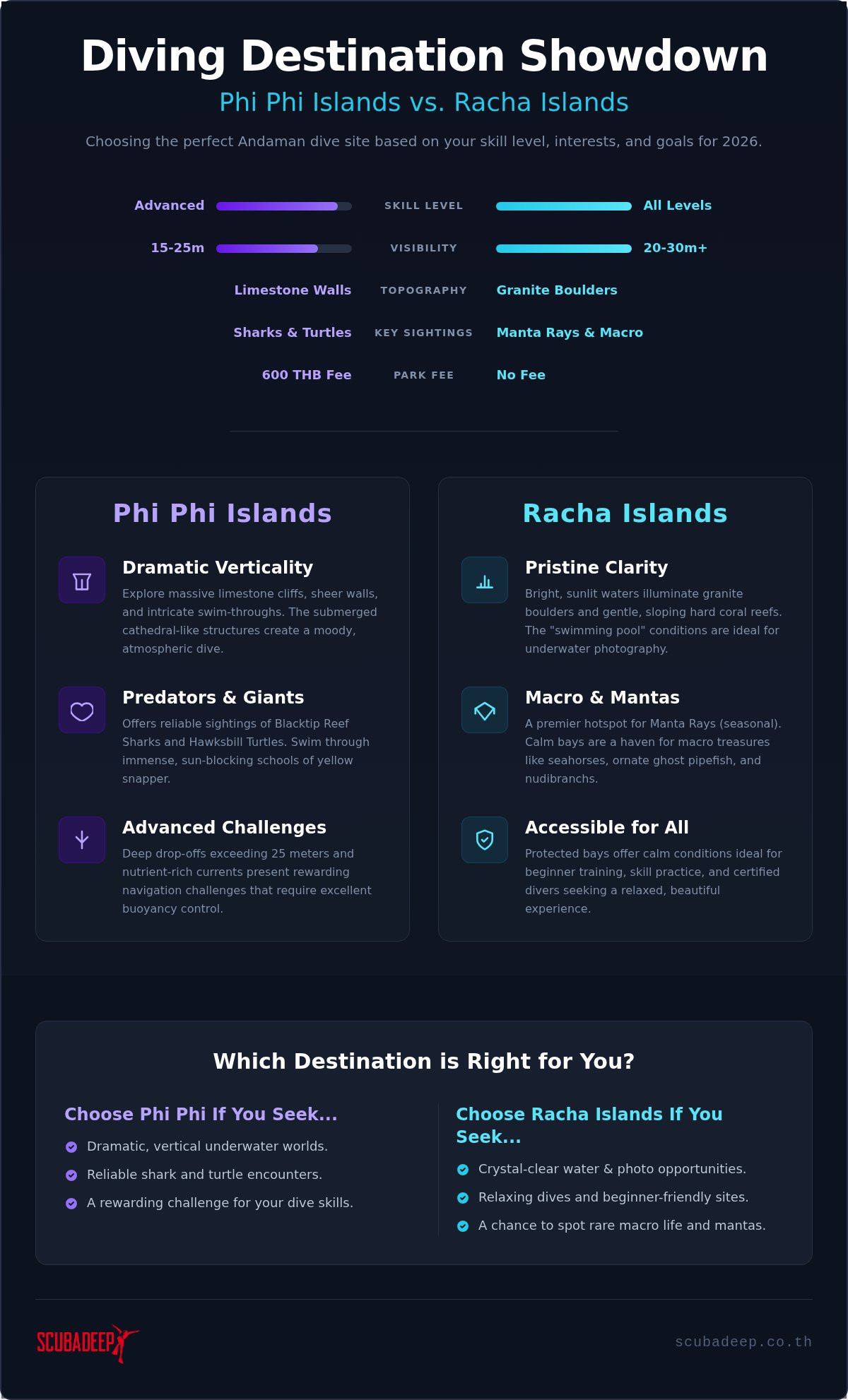
We believe that a successful dive trip starts with expert preparation and local insight. This guide settles the debate by matching each destination to your current certification and underwater goals. You'll learn which sites are hosting the most active shark populations at Bida Nok in 2026, where the 30-meter visibility is currently peaking, and how to navigate logistics like the 600 THB national park fees required for Phi Phi. We'll provide a clear comparison of the dramatic limestone walls versus the serene granite plateaus; this ensures you book your next boat seat with absolute confidence.
Key Takeaways
- Contrast the dramatic limestone walls and swim-throughs of Phi Phi with the gentle sloping reefs and white sandy bottoms found at the Racha Islands.
- Evaluate Phi Phi vs Racha Islands diving based on your target marine life, whether you seek resident blacktip reef sharks or elusive macro species like seahorses.
- Identify which destination matches your certification, from the calm classroom conditions of Racha Yai to the advanced navigation challenges found at Phi Phi.
- Understand the 2026 logistics, including the specific national park fees required for Phi Phi and why the Racha Islands remain a streamlined alternative for daily trips.
Marine Topography and Underwater Landscapes: Phi Phi vs. Racha
The geological foundations of these two destinations create entirely different diving experiences. When evaluating Phi Phi vs Racha Islands diving, you must choose between dramatic verticality and serene horizontal clarity. One offers a moody, atmospheric journey through shadows; the other provides a brightly lit, high-visibility environment that feels like a natural laboratory. Your choice dictates the type of light, surge, and navigation challenges you will encounter during your trip.
The Dramatic Verticality of the Phi Phi Marine Park
Diving within the Phi Phi Islands archipelago feels like exploring a submerged cathedral. The massive limestone cliffs that define the landscape above water continue deep below the surface, creating sheer walls that drop into the blue. These vertical structures are riddled with jagged reef formations, hidden caverns, and swim-throughs. At sites like Bida Outer, you'll encounter the famous "Mushroom" formation, where years of erosion have sculpted the rock into a unique overhang. These walls are prime real estate for vibrant soft corals and massive gorgonian sea fans. They thrive in the nutrient-rich currents that sweep past the cliffs, providing a home for thousands of schooling fish.
The Pristine Clarity of Racha Yai and Racha Noi
The Racha Islands offer a stark contrast with their granite-based geology and white sandy bottoms. Racha Yai is renowned for its protected bays, where the shallow sloping reefs provide "swimming pool" conditions. This makes it an ideal setting for those looking to master buoyancy or practice skills. Moving further south to Racha Noi, the topography shifts toward massive granite boulders that mimic the iconic landscapes of the Similan Islands. These boulders create interesting channels and depth profiles that appeal to experienced divers. Because the Racha sites lack the towering cliffs of Phi Phi, light penetration is superior. This clarity makes the islands the premier choice for underwater photography, as the sun illuminates the hard coral gardens even at greater depths.
Depth profiles also vary significantly between the two regions. While Racha Yai features many sites with depths ranging from 5 to 20 meters, Phi Phi often requires more technical control to navigate deep drop-offs that exceed 25 meters. Understanding these physical differences helps you select the environment that best supports your current certification and comfort level. Whether you prefer the jagged, vertical adventure of a limestone wall or the bright, boulder-strewn slopes of a granite island, both locations offer world-class underwater scenery.
Biodiversity and Marine Life: What Can You Expect to See?
The choice between Phi Phi vs Racha Islands diving often comes down to your "must-see" list. While both locations are situated in the same sea, their resident populations differ due to the specific coral environments and current patterns. Phi Phi is characterized by vibrant soft corals and sea fans that thrive on limestone walls, whereas the Racha Islands feature resilient hard coral gardens and sandy patches that attract a completely different set of marine residents.
Predators and Giants at Phi Phi
Diving in the Phi Phi Marine Park offers one of the most reliable opportunities to see blacktip reef sharks and Hawksbill turtles in their natural habitat. At sites like Palong Wall and Bida Nok, these predators are frequently seen patrolling the shallow reef flats or resting in the sand. The biomass here is staggering. Massive schools of yellow snapper often gather in such high densities that they "black out" the sun, creating a shimmering golden curtain for divers to swim through. Anemone Reef provides a masterclass in symbiosis, where various species of clownfish and tiny porcelain crabs find permanent protection within the stinging, nutrient-rich tentacles of sea anemones. These sites are a haven for those who want to see the classic "big" sights of the Andaman Sea. For divers eager to learn more about observing apex predators responsibly, specialized platforms such as HaiTauchen provide helpful background on shark diving and species habits.
Rare Finds and Drift Dives in the Rachas
The Racha Islands serve as a primary destination for those seeking pelagic encounters and macro treasures. Racha Noi, particularly at the South Tip, is the region's premier hotspot for Manta Rays. These graceful giants visit the area's cleaning stations during their seasonal migrations, allowing divers to witness natural grooming behaviors from a respectful distance. In the calmer bays of Racha Yai, the focus shifts to the small and the strange. The white sandy bottoms and artificial reefs, including several sunken wrecks, are home to seahorses, ornate ghost pipefish, and colorful nudibranchs. These "swimming pool" conditions, highlighted in National Geographic's feature on Phuket and the surrounding islands, make it easy to spot juvenile marine life that might be missed in more turbulent waters.
The coral health at the Rachas remains impressive, with staghorn and table corals providing a sturdy architecture for reef fish. Whether you are hunting for a rare nudibranch or waiting for a Manta Ray to glide overhead, these islands offer a diverse palette of life. To ensure you don't miss these elusive creatures, joining a guided Fun Dive with a professional who knows the specific "hiding spots" is highly recommended.
Skill Level Alignment: Which Island Suits Your Certification?
Matching your current certification to the right environment is the most critical safety decision you'll make. When comparing Phi Phi vs Racha Islands diving, the technical demands of the sites vary significantly. One offers a sheltered, predictable classroom. The other presents a dynamic field where you must manage surge and vertical depth control. Understanding these nuances ensures you don't end up in conditions that exceed your comfort zone.
The Ideal Environment for Your Open Water Course
Racha Yai is widely considered the premier location for students and beginners. Its protected bays provide nearly static water conditions, which allows you to focus on mask clearing or buoyancy without battling external forces. The easy entries and exits from the boat build confidence quickly for those new to the sport. This Try Scuba Diving Phuket: The Ultimate Beginner’s Buying Guide for 2026 provides a detailed breakdown of why these calm waters are essential for your first breaths underwater. For a broader look at the marine conditions in the area, you can consult this professional guide to diving in Koh Phi Phi and the surrounding islands.
Elevating Your Skills with Specialty Diving
Phi Phi requires a higher level of environmental awareness. The limestone walls create surge as waves hit the cliffs, requiring precise buoyancy to avoid contact with the reef. Taking an Advanced Diving Course Thailand is the most efficient way to unlock the deeper sections of these sites. This training is essential for exploring the King Cruiser Wreck, where depths reach 30 meters and currents can be strong. Utilizing an Enriched Air Nitrox Course here extends your bottom time, allowing for a safer exploration of the wreckage. Before booking, use this checklist to self-assess your readiness for Phi Phi vs Racha Islands diving:
- Can you maintain a safety stop in a mild current?
- Are you comfortable with wall navigation where the bottom is out of sight?
- Do you have experience with negative entries in choppy water?
- Is your buoyancy control sufficient to stay 1 meter away from fragile soft corals?
If you answered no to any of these, starting with a Scuba Refresher Review at the Racha Islands will help you regain your confidence before tackling the more challenging sites. Our mentors prioritize your safety by ensuring you are placed in an environment that matches your current ability while encouraging steady progression.
Planning Your Expedition: Logistics and Professional Guidance
Logistics play a major role in your overall enjoyment of the day. When comparing Phi Phi vs Racha Islands diving, travel time is often the deciding factor for many guests. Trips to the Racha Islands are typically shorter, which makes them a streamlined option for those who want to be back on land by late afternoon. In contrast, the journey to Phi Phi is a full-day commitment. While the boat ride is longer, it's a necessary investment to reach the dramatic limestone walls and diverse marine park environments we've explored.
Small groups are a non-negotiable standard at Scubadeep. We limit our ratios to ensure every diver receives personalized attention from our multi-language professionals. This approach isn't just about safety; it's about having an expert eye to help you spot camouflaged macro life or resident sharks. As an SSI Diamond Level center with over 10 years of experience, we focus on the technical details that budget operators often overlook. We act as your elite mentors, ensuring your gear, gas, and dive plan are optimized for the day's conditions.
Maximizing Your Day Trip Experience
A professional 3-dive itinerary is a methodical operation designed for comfort and safety. It starts with a comprehensive briefing followed by a fresh breakfast as the boat departs. High-tier vessels must be equipped with emergency oxygen, first aid kits, and specialized safety gear to handle any situation at sea. Reviewing these 15 Essential Scuba Diving Safety Tips will help you prepare for the day's standard operating procedures. Our team manages the logistics so you can focus entirely on the underwater experience.
Beyond the Day Trip: Continuing Your Education
Every dive should be a purposeful step forward in your scuba certification journey. If you haven't dived in the last six months, we strongly recommend a Scuba Refresher Review. This is especially important before tackling the surges and vertical walls of Phi Phi. Our mentors prioritize your safety by assessing your skills and offering specialized training in Deep or Wreck diving for those looking to go further. Whether you're ready to book a Fun Dive Phuket or start a professional course, choosing a trusted guide ensures your trip is handled with absolute precision.
Secure Your Next Underwater Discovery
Deciding between Phi Phi vs Racha Islands diving depends on your specific goals for the season. If you want to explore dramatic limestone walls and encounter resident blacktip sharks, the marine park at Phi Phi is your ideal destination. For those who prioritize pristine visibility, macro treasures, or a calm environment to refine their buoyancy, the Racha Islands provide an unmatched "swimming pool" experience. Both locations offer world-class scenery; however, the success of your trip depends on matching these environments to your current comfort level.
Scubadeep operates as an SSI Diamond Level Dive Center where safety-first protocols are standard for every expedition. Our professional multi-lingual instructors act as your elite mentors, ensuring that every dive is both adventurous and secure. We take pride in our 10 plus years of experience and our deep knowledge of these local sites. Book your Phi Phi or Racha Islands Fun Dive with Scubadeep today to ensure your journey through the Andaman Sea is handled with expert care. We can't wait to see you on the boat and share these hidden wonders with you.
Frequently Asked Questions
Is Phi Phi or Racha better for a first-time scuba dive?
Racha Yai is the superior choice for a first-time scuba dive due to its protected bays and shallow, sloping reefs. These conditions create a controlled environment that mimics a swimming pool; this allows beginners to focus on basic skills without the stress of strong currents. When evaluating Phi Phi vs Racha Islands diving for newcomers, the Rachas provide the stability needed to build confidence before moving toward the vertical walls and surge of Phi Phi.
Can I see Whale Sharks at either Phi Phi or Racha Islands?
Whale sharks are occasional visitors to both locations, but Racha Noi offers a statistically higher chance of pelagic encounters. The deep waters and granite plateaus at the southern tip of Racha Noi act as a magnet for larger species. While sightings are never guaranteed, the 2026 season has shown consistent activity for both whale sharks and manta rays. Phi Phi remains excellent for seeing resident blacktip reef sharks and hawksbill turtles.
How long is the boat ride from the mainland to the Phi Phi dive sites?
The boat journey from the mainland to the Phi Phi Islands generally takes between 2 to 3 hours on a standard dive vessel. This travel time makes the expedition a full-day commitment, usually departing early in the morning and returning by sunset. When comparing Phi Phi vs Racha Islands diving logistics, the Racha Islands are significantly closer; travel times are often under 90 minutes. This makes the Rachas a popular choice for those with limited schedules.
What is the best time of year for diving at the Racha Islands?
The optimal window for diving at the Racha Islands is between November and early May. During these months, the Andaman Sea experiences its calmest surface conditions and peak visibility, which often exceeds 30 meters. While diving is possible year-round, the dry season ensures the most predictable boat travel and the best light penetration for underwater photography. The water temperature remains a comfortable 29 degrees Celsius throughout this period.
Do I need an Advanced certification to dive at Phi Phi?
You don't strictly need an advanced certification for all Phi Phi sites, but it's highly recommended for a complete experience. Sites like Bida Outer or the nearby King Cruiser Wreck often involve depths and currents that are better managed with advanced training. An Open Water certification allows you to explore many shallow reef flats, but upgrading your skills ensures you can safely navigate the more technical vertical walls and deeper caverns found in the marine park.
What happens if I haven’t dived in over a year before visiting these islands?
If your last dive was over 12 months ago, we strongly recommend a Scuba Refresher Review before heading to the islands. This session allows you to practice essential skills like mask clearing and buoyancy control in a controlled setting. It's a critical safety step that ensures you're comfortable and confident before tackling the dynamic conditions of the open sea. Our mentors prioritize your safety by assessing your readiness before every trip.