

What if your most memorable underwater experience in 2026 isn't found at a crowded tourist hub, but within a protected sanctuary just off the southern coast? You likely want crystal-clear visibility without the stress of unpredictable conditions or sites that don't match your current certification level. We understand that choosing between the various Racha Islands dive sites can feel uncertain, especially when you're balancing a desire for adventure with the absolute necessity of safety.
You're right to prioritize a dive plan that respects your limits while offering the chance to explore world-class environments. This comprehensive guide delivers a detailed breakdown of the region, from the serene, wreck-dotted bays of Racha Yai to the deep, current-swept pinnacles of Racha Noi. We'll examine the specific marine life residents, provide professional tips for avoiding the crowds, and help you decide exactly which island fits your personal goals. By the end, you'll have a clear, professional strategy for your next day trip into these premier Thai waters.
Key Takeaways
- Understand why the unique granite geography of the Racha Islands ensures exceptional water clarity and sheltered conditions throughout the year.
- Identify the most suitable Racha Islands dive sites for your certification level, from the calm training bays of Racha Yai to the challenging pinnacles of Racha Noi.
- Master the logistics of a standard three-dive day trip, ensuring you select an itinerary that maximizes your time underwater while maintaining strict safety protocols.
- Learn how to spot iconic marine life, including the seasonal migration patterns of Manta Rays at Racha Noi's South Tip.
- Gain professional tips on using specialized equipment and Enriched Air Nitrox to extend your exploration of the region's deeper wrecks and reefs.
The Allure of the Racha Islands: Thailand’s Year-Round Diving Gems
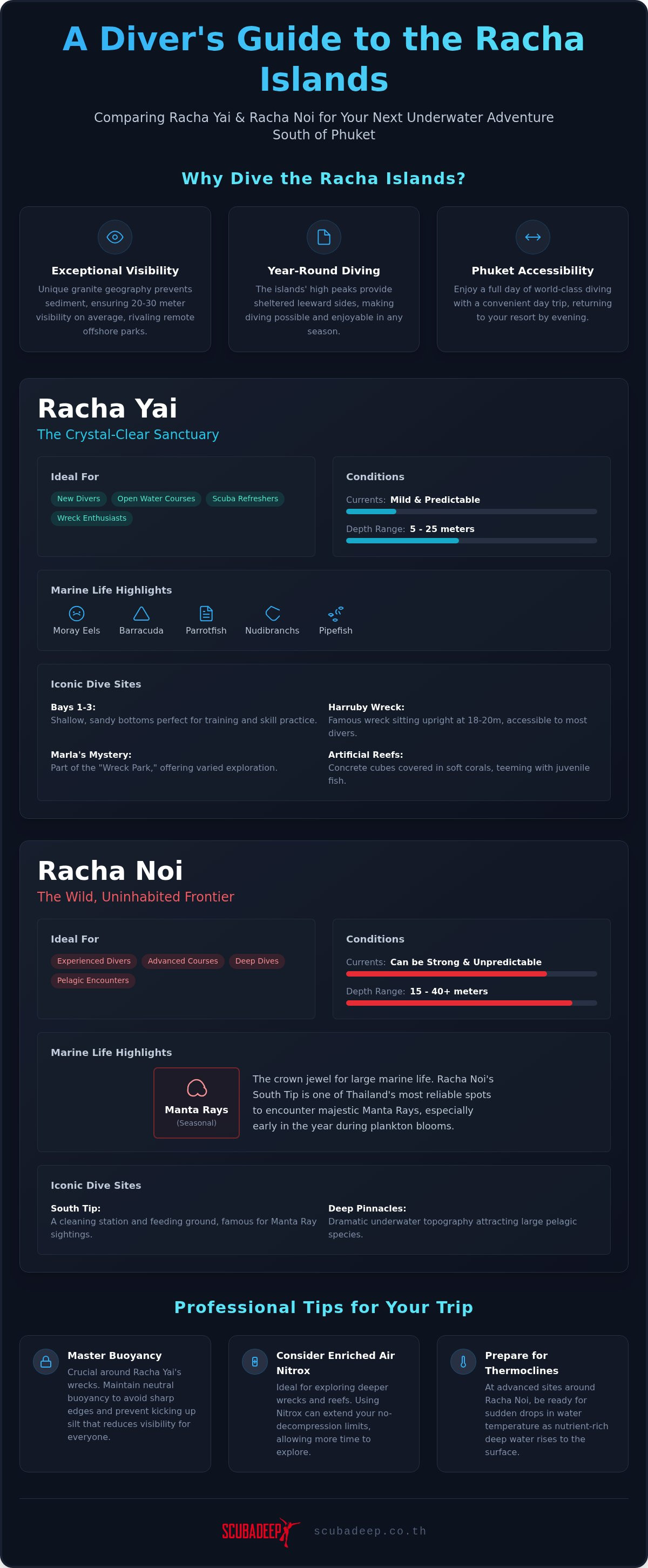
The Ko Racha Islands represent a premier diving destination within the Andaman Sea, located just 12 to 20 kilometers south of Phuket. These granite islands provide a distinct geographic advantage over the limestone formations found elsewhere in Thailand. Because granite is significantly harder, it resists erosion and prevents the fine sediment that often clouds other coastal areas. This geological stability ensures that Racha Islands dive sites maintain exceptional water clarity regardless of the season.
The archipelago consists of two primary islands: Racha Yai and Racha Noi. Racha Yai, the larger of the two, serves as an ideal environment for those completing an Open Water Course or a Scuba Refresher Review. Its sheltered eastern bays offer calm, sandy bottoms and predictable conditions. In contrast, Racha Noi is the rugged, uninhabited sibling. It sits further south, exposed to the open sea, making it a playground for experienced divers seeking deeper pinnacles and pelagic encounters.
For travelers based in Phuket, these islands offer world-class underwater scenery without the logistical commitment of a multi-day liveaboard. You can enjoy a full day of premier diving and return to your resort in time for dinner. This accessibility makes the Rachas a top choice for those who value both high-end exploration and the comfort of land-based hospitality.
Visibility and Conditions in the Andaman
Visibility at these sites consistently averages between 20 and 30 meters, rivaling the clarity of more remote offshore parks. During the dry season from November to April, the surface is typically calm and the water is a vibrant turquoise. The green season, while occasionally bringing wind, rarely stops the diving because the islands' high peaks offer protected leeward sides. At the more advanced sites around Racha Noi, divers should prepare for sudden thermoclines where water temperatures drop several degrees as nutrient-rich deep water rises to the surface.
Marine Biodiversity Highlights
The underwater landscape is a rich tapestry of biodiversity. In the shallower bays of Racha Yai, sprawling hard coral gardens provide homes for Moray Eels, schools of Barracuda, and vibrant Parrotfish. For those with a keen eye for detail, the granite crevices hide macro treasures like Nudibranchs and ornate Pipefish. Racha Noi's South Tip is the region's crown jewel for large marine life. It's one of the most reliable locations in Thailand to encounter the majestic Manta Ray, especially during the early months of the year when plankton blooms attract these gentle giants.
Racha Yai Dive Sites: Crystal Clear Waters and Iconic Wrecks
Racha Yai is often the first encounter divers have with the Andaman's beauty. Its gentle conditions and predictable visibility make it the premier choice for completing an open water course. The eastern side of the island features a series of protected bays, numbered one through three. These bays provide shallow, sandy entries that are perfect for practicing essential skills. You won't have to worry about heavy surge or difficult entries here, which builds confidence for new divers as they begin their journey.
Beyond training, Racha Yai hosts a unique "Wreck Park" that separates it from other Racha Islands dive sites. This collection of sunken vessels and artificial structures serves as a vital habitat for local life. A marine biodiversity study highlights how these artificial reefs significantly increase species density in areas that were previously just sand. Large concrete cubes have been deployed across the seabed, and they're now completely covered in soft corals and swarming with juvenile reef fish.
The Wrecks of Bay 1 and 2
The Harruby is the most famous wreck in the area. It sits upright at a depth of 18 to 20 meters, making it highly accessible for most recreational levels. Nearby, Marla’s Mystery and several smaller sailboat wrecks offer varied exploration opportunities. These sites are ideal for an advanced diving course Thailand, where students can practice wreck navigation and deep diving techniques. Safety is paramount when exploring these structures. Maintaining neutral buoyancy is critical because metal edges can be sharp, and fine silt on the decks is easily disturbed by poor finning techniques.
Lucy’s Reef and Mushroom Rocks
On the island's southern and western edges, the landscape shifts to sloping reefs and massive granite boulders. Lucy’s Reef is known for its dense thickets of staghorn coral and frequent sightings of giant pufferfish and clouded moray eels. If the tides are right, you can enjoy a gentle drift dive toward Mushroom Rocks. These large granite formations act as natural cleaning stations. You'll often see small cleaner wrasse servicing larger groupers. If you want to experience these vibrant ecosystems firsthand, booking a Fun Dive Phuket trip is the most efficient way to see the highlights of Racha Yai in a single day.
Racha Noi Dive Sites: Deep Pinnacles and Manta Ray Encounters
Racha Noi is the adventurous sibling to Racha Yai, sitting further south where the Andaman Sea opens up. This exposure creates a dynamic environment characterized by giant granite boulders and drop-offs that plunge well beyond 40 meters. Most Racha Islands dive sites in this area require an advanced certification due to the depth and potential for strong currents. Adhering to official diving and snorkeling regulations is vital for navigating these more challenging waters safely.
The topography here is far more dramatic than the northern islands. You'll find massive submerged pinnacles that act as magnets for large schools of predatory fish. While the bays of Racha Yai offer serenity, Racha Noi offers the thrill of the open ocean. It's a place where you feel the true scale of the underwater world, surrounded by towering rock formations and the deep blue of the Andaman.
The South Tip: Home of the Mantas
The South Tip is the region's premier location for pelagic sightings. It features a deep underwater plateau where Manta Rays frequently congregate to feed and visit cleaning stations. Currents at the tip can be unpredictable, occasionally creating a "washing machine" effect where water moves in multiple directions simultaneously. Our professional guides use the massive boulders for shelter, ensuring you remain safe while observing these giants. Photographers should stay low and avoid swimming directly toward the rays. Letting the animals approach you results in much better shots and less stress for the marine life.
North Point and Banana Bay
North Point offers dramatic topography and is another hotspot for Whale Sharks during the 2026 migration season. The underwater scenery is dominated by huge granite blocks that create swim-throughs and canyons for exploration. If you're looking for a gentler introduction to the island, Banana Bay provides a shallower alternative. It's an excellent site for a try scuba diving experience. You'll find colonies of garden eels swaying in the sandy patches and blue-spotted stingrays resting beneath the coral overhangs.
If you're ready to explore these advanced pinnacles, join our expert team for a Deep Dive Course to gain the skills and confidence needed for Racha Noi's world-class depths.
Maximizing Your Adventure: Logistics and Safety for Racha Island Trips
A typical day trip to the Racha Islands begins with an early morning pickup and a departure from Chalong Pier. Most professional operators follow a three-dive schedule. This usually involves two morning dives at the more challenging Racha Noi sites followed by a final afternoon dive at Racha Yai. This logical progression ensures you tackle the deeper, current-prone sites while your energy is at its peak. Between dives, you'll have time to enjoy a professional briefing and high-quality meals on board.
Safety remains our absolute priority during every excursion. We maintain a high standard of equipment maintenance and professional supervision. Before your trip, reviewing these scuba diving safety tips provides a solid foundation for a stress-free experience. For those targeting the deeper Racha Islands dive sites at Racha Noi, we suggest using Enriched Air Nitrox. This specialized gas mix extends your bottom time, giving you more minutes to observe pelagic life while reducing post-dive fatigue.
Choosing the Right Certification Level
Selecting the right island is a matter of matching your experience to the environment. Racha Yai is the gold standard for beginners and those building their confidence. If you're looking to push your limits, Racha Noi's pinnacles demand the skills found in an Advanced Open Water Course. We encourage continuous skill progression through specialized training like the Deep Dive Course or the Wreck Diving Course. If it's been more than six months since your last dive, a Scuba Refresher Review is a mandatory step to ensure your skills remain sharp and your buoyancy is precise.
Sustainable Diving Practices
The health of the Andaman Sea depends on the responsible behavior of every visitor. We enforce a strict "no-touch" policy for all corals and marine life to preserve these delicate ecosystems. Using reef-safe sunscreen is another simple but effective way to prevent chemical damage to the reef. Proper weighting is equally important. If you're overweighted, you're more likely to make accidental contact with the seabed or fragile staghorn corals. As a leader in eco-conscious diving education, Scubadeep integrates these conservation principles into every briefing to ensure these sites remain pristine for future generations.
Secure Your Place in Thailand’s Premier Underwater Sanctuary
The Racha Islands offer a rare combination of crystal-clear visibility and diverse underwater topography that caters to every level of expertise. From the iconic wrecks of Racha Yai to the deep, Manta-frequented pinnacles of Racha Noi, these sites provide a consistent and high-quality environment for exploration throughout the year. You now have the knowledge to choose the specific Racha Islands dive sites that align with your certification and personal goals.
To experience these waters with the highest standards of safety and expertise, we invite you to join our team. We prioritize elite mentoring from certified professionals, small group sizes for personalized attention, and the availability of high-end equipment including Enriched Air Nitrox for those deeper excursions. Book Your Racha Islands Dive Adventure with Scubadeep today and take the next step in your diving journey with confidence. We look forward to guiding you through the best-kept secrets of the Andaman Sea.
Frequently Asked Questions
Are the Racha Islands suitable for first-time divers?
Yes, the Racha Islands are excellent for beginners. Racha Yai's eastern bays provide shallow, sandy bottoms and very little current. These conditions are perfect for a Try Dive or starting an Open Water Course. You'll enjoy high visibility and a safe environment to practice your first breaths underwater without the stress of challenging waves or deep drop-offs.
When is the best time of year to see Manta Rays at Racha Noi?
The best window for Manta Ray sightings at Racha Noi is typically from January through April. During these months, nutrient-rich currents bring plankton to the South Tip, attracting these majestic pelagics to the cleaning stations. While sightings aren't guaranteed, 2026 migration patterns indicate this is the most reliable time for a successful encounter at the island's deeper pinnacles.
Do I need an advanced certification to dive at Racha Yai?
You don't need an advanced certification to enjoy Racha Yai. It's one of the most accessible Racha Islands dive sites, offering shallow reefs for beginners and deeper wrecks for experienced divers. While the Harruby wreck sits at 20 meters, many reef sections are much shallower. This makes it a versatile choice for groups with mixed experience levels.
What is the average water temperature at the Racha Islands?
Water temperatures consistently range between 28°C and 30°C throughout the year. This warmth makes diving comfortable in a 3mm wetsuit or even a simple rash guard. Be aware that deeper sites at Racha Noi often feature thermoclines. These are layers of cooler water rising from the depths that can drop the temperature by a few degrees momentarily during your dive.
Can non-divers or snorkelers join the Racha Island dive trips?
Non-divers and snorkelers can certainly join our daily excursions. Racha Yai's clear, shallow bays offer fantastic snorkeling opportunities while divers are underwater. It's a great way for families or couples with different interests to enjoy the Andaman Sea together. Non-diver rates typically range from 2,200 to 2,600 THB depending on the specific boat and itinerary selected.
How far are the Racha Islands from the mainland by dive boat?
The islands are located approximately 12 to 20 kilometers south of Phuket. A standard dive boat takes about 90 minutes to reach Racha Yai from Chalong Pier. If your trip continues further south to Racha Noi, expect another 30 to 45 minutes of travel time. The journey is a pleasant part of the experience, offering scenic views of the Phuket coastline.