

The most breathtaking encounters in the Andaman Sea aren't reserved for the lucky; they're earned by those who understand the rhythm of the ocean. You've likely seen the vibrant imagery of whale sharks and manta rays and wondered if you'll actually witness them during your journey. It's a common concern for divers who fear missing out on iconic sightings or feel uncertain about the best windows for exploration. We understand that a premier diving experience requires more than just being underwater; it requires professional insight and a deep respect for the ecosystem.
This phuket marine life guide provides the authoritative overview you need to transform a standard trip into a professional-grade expedition. You'll discover the extraordinary species that call these waters home and learn the specific protocols for world-class encounters. We've compiled a clear checklist of must-see species and mapped out the seasonal patterns of the Andaman Sea, including the critical park closures between May and October, ensuring you're in the right place at the right time. From navigating the strict 2025 national park regulations to mastering ethical wildlife interaction, this guide prepares you to dive with confidence and responsibility. Whether you're pursuing an Advanced Open Water Course or exploring the deep reefs of the Racha Islands, your path to mastery starts here.
Key Takeaways
- Identify the specific environmental factors, like nutrient-rich currents and visibility, that make the Andaman Sea a global biodiversity hotspot.
- Use this phuket marine life guide to master the art of spotting the "Big Three," including Whale Sharks, Manta Rays, and Sea Turtles, alongside hidden macro treasures.
- Learn the professional "Elite Mentor" protocols for respectful wildlife interaction, including specific distance requirements to ensure safe and sustainable encounters.
- Understand why certain iconic species are found at specific depths and how advancing your certification level unlocks access to these exclusive underwater environments.
- Stay informed on the latest 2025 national park regulations to ensure your dives are compliant, ethical, and focused on coral preservation.
Understanding the Marine Ecosystem of the Andaman Sea
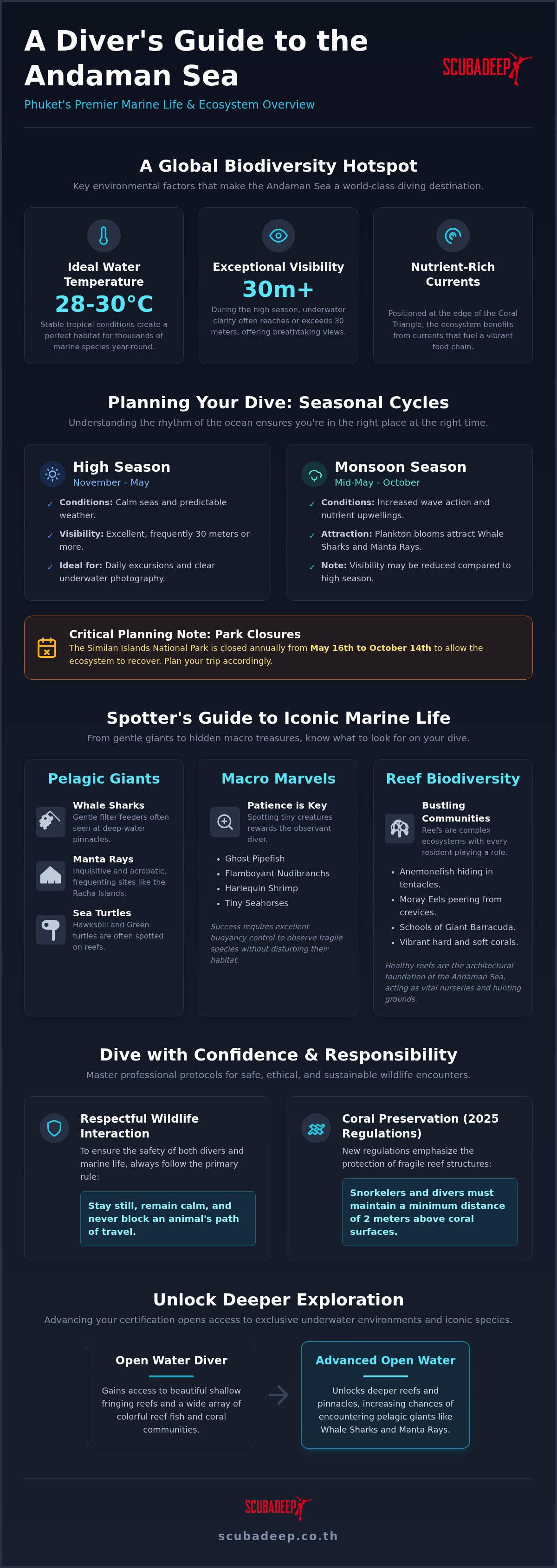
The Andaman Sea ecosystem represents one of the most biologically diverse environments on the planet. Positioned at the edge of the Coral Triangle, Thailand's waters benefit from a unique intersection of nutrient-rich currents and stable tropical conditions. This phuket marine life guide highlights why the region is a global priority for conservation and exploration. Divers encounter water temperatures consistently ranging between 28°C and 30°C; this creates an ideal habitat for thousands of marine species. Phuket serves as the strategic gateway to this underwater world, offering immediate access to shallow fringing reefs and deep-sea pinnacles that drop into the abyss.
The Role of Coral Reefs in Thailand
Coral reefs are the architectural foundation of the Andaman Sea. The region features a sophisticated mix of hard corals, like massive Porites, and vibrant soft corals that thrive in high-current areas. These organisms exist in a delicate symbiotic relationship with microscopic algae. Healthy reefs act as nurseries for reef fish and essential hunting grounds for larger pelagic life. Recent 2025 Thai government regulations emphasize this importance. Snorkelers must stay at least two meters above coral surfaces to prevent physical damage. Protecting these structures is vital for maintaining the biodiversity that attracts professional divers from across the globe.
Visibility and Seasonal Cycles
Marine clarity and species sightings are dictated by the monsoon cycles. The high season, running from November to May, offers the most predictable conditions. Underwater visibility often reaches 30 meters or more during this window. The sea remains calm and accessible for daily excursions. Conversely, the monsoon season from mid-May to October brings increased wave action and nutrient upwellings. While visibility may decrease, these plankton blooms are the primary catalyst for attracting "giants" like whale sharks and manta rays. It's essential to plan around seasonal closures. For instance, the Similan Islands National Park closes annually from May 16 to October 14 to allow the ecosystem to recover. Understanding these cycles helps you choose the right time for your specific underwater goals.
A Spotter’s Guide to Iconic Species in Thailand
The Andaman Sea operates as a theater of biological marvels, hosting everything from massive filter feeders to creatures no larger than a fingernail. This phuket marine life guide categorizes these sightings to help you prepare for your next underwater expedition. Whether you're scanning the blue for shadows or peering into coral crevices, knowing what to look for is the first step toward a successful encounter.
Pelagic Giants: Whale Sharks and Mantas
Whale sharks and manta rays are the undisputed stars of Thailand’s deep-water pinnacles. These are gentle giants. They often frequent offshore sites where nutrient-rich currents converge, such as the Racha Islands. When a whale shark approaches, it usually maintains a steady, slow pace. Professional divers know to stay still and avoid blocking the animal's path. Manta rays are more inquisitive and often perform acrobatic loops in the water column. Witnessing these creatures during a fun dive in Phuket remains a career highlight for many. The Andaman Sea ecoregion provides the necessary habitat for these migrations, supporting a food chain that sustains these massive pelagics. Sea turtles, particularly Hawksbills and Greens, also frequent these areas, often seen resting on reefs or surfacing for air.
The Colorful World of Macro Life
Macro photography is a rising trend in Thailand’s diving community. It rewards the patient observer. Spotting an elusive Ghost Pipefish or a flamboyant Nudibranch requires a keen eye and steady nerves. You might also find Harlequin Shrimp or tiny Seahorses tucked away in protected corners of the reef. Success in macro spotting relies heavily on your buoyancy control. Divers must hover precisely to observe these fragile species without disturbing the seafloor. This level of control protects the environment while allowing for intimate wildlife photography.
Reef Biodiversity and Symbiosis
The reefs are bustling communities where every resident has a specific role. Anemonefish (Nemo) dart among stinging tentacles, while moray eels peer from rocky crevices. Giant barracudas often patrol the reef edge in silver schools. Sharks are another common highlight, though they are often misunderstood. Leopard sharks are docile bottom-dwellers, and blacktip reef sharks are generally timid, posing no threat to respectful divers. Mutualism within the Andaman reef system is a biological interaction where species like the cleaner wrasse provide essential health services to larger fish in exchange for a meal. To see these intricate relationships in person, you can explore our Phuket dive sites for your next adventure.
Professional Protocols for Safe and Respectful Encounters
Professional diving is defined by the quality of the interaction, not just the sighting itself. Adopting an "Elite Mentor" philosophy means you act as a silent observer rather than an intruder. This phuket marine life guide emphasizes that respect for the environment is the hallmark of a high-end diving experience. Maintaining a proper distance is non-negotiable. For whale sharks and manta rays, you should remain at a distance that allows the animal to dictate the encounter. Your dive guide plays a critical role here, acting as a consultant who monitors animal behavior and positions the group for the best view without causing distress.
Mastering Buoyancy for Environmental Protection
Peak performance buoyancy is the most vital skill for any marine life enthusiast. It's the difference between a clumsy encounter and a seamless observation. Avoiding accidental contact with fragile coral structures is essential for reef longevity. According to the 2025 national regulations, maintaining a safe distance from the reef is a legal requirement for all visitors. When you master your trim and weighting, you move with greater stealth and consume less air. This results in longer, calmer encounters where fish are more likely to stay in your vicinity. Proper weighting ensures you don't need to use your hands or fins to stay level, protecting the very ecosystem you came to see.
The Ethics of Underwater Photography
Capturing the perfect image requires patience and professional discipline. Many scuba diving safety tips apply directly to photography, especially regarding situational awareness. As of April 2025, Thai national regulations permit underwater photography only for divers with an Advanced Certification or at least 40 logged dives. This ensures operators have the skill to handle equipment without damaging reefs. Never use strobes or high-intensity lights in a way that distresses sensitive species like seahorses or nocturnal hunters. Chasing a fish always results in a poor shot and a stressed animal. Instead, wait for the life to come to you. If you're ready to elevate your skills, consider enrolling in our Advanced Open Water Course to master these professional techniques.
Advancing Your Skills for Deeper Marine Exploration
Many divers start their journey with a checklist of iconic species, yet they soon realize that the most spectacular sightings often occur at depths beyond the reach of entry-level training. This phuket marine life guide bridges the gap between your curiosity and the technical skills required to reach these exclusive environments. While shallow reefs offer incredible color, the deep-sea pinnacles and offshore wrecks are where the truly massive pelagics congregate. To access these zones safely, completing an Advanced Diving Course in Thailand is essential. This training expands your depth limit to 30 meters, opening the door to Phuket’s best dive sites. Utilizing an Enriched Air Nitrox Course further enhances these encounters by providing extended bottom time, allowing you more minutes to observe hunting predators or schooling rays.
Deep Diving and Wreck Encounters
Wrecks like the King Cruiser function as artificial reefs, hosting a density of life rarely seen elsewhere. You'll find the structure colonized by massive schools of snappers and obscured by clouds of baitfish. Deep-sea pinnacles act as magnets for pelagic hunters. Expect to see schools of tuna and trevally patrolling the perimeter. Exploring depths beyond 18 meters requires strict adherence to safety protocols. Gas management and NDL (No Decompression Limit) awareness become critical when you're observing the unique biodiversity of the deep Andaman. These sites demand a higher level of situational awareness to ensure a safe and rewarding encounter.
The Journey from Beginner to Expert
Every expert was once a novice. The Open Water course provides the fundamental ballast for a lifetime of ocean discovery. Beyond the technical skills, the benefits of scuba diving include profound improvements in mental clarity and physical wellness. Being surrounded by nature in its most raw form offers a unique perspective on the world. Scubadeep acts as your professional mentor throughout this progression. We don't just provide a service; we consult on your personal journey to ensure every dive is a safe, high-tier experience. Start your progression today and discover the full potential of the Andaman Sea.
Take the Lead in Marine Exploration
Mastering the waters of the Andaman Sea is a journey of both skill and discovery. You've explored the biological complexities of the region and learned the ethical protocols required for world-class encounters. This phuket marine life guide serves as your foundation, but the true experience happens beneath the surface. By prioritizing professional training and environmental respect, you ensure that every dive contributes to the preservation of Thailand's vibrant reefs. We believe that meaningful encounters are the reward of patience and technical proficiency.
We invite you to advance your expertise with a partner committed to your personal progression. Scubadeep provides expert-led training in the heart of the Andaman, anchored by professional safety protocols for every encounter. Our focus on high-end equipment and small group sizes ensures that your journey is as exclusive as the species you'll witness. Whether you're aiming for a deeper pinnacle or a hidden macro treasure, we act as your dedicated mentor. Begin your journey with Thailand’s premier dive center today and see the ocean through the eyes of a professional. The next great discovery is waiting for you.
Frequently Asked Questions
What is the best time of year to see whale sharks in Thailand?
The best time to see whale sharks in Thailand is typically between February and April. This period marks the peak of the plankton blooms that attract these filter feeders to sites like the Racha Islands. While sightings occur throughout the high season from November to May, these specific months offer the highest probability. Professional guides monitor water conditions and nutrient currents to position divers for these extraordinary encounters.
Are there dangerous sharks in the Andaman Sea?
There aren't any sharks in the Andaman Sea that pose a significant danger to divers. Most encounters involve docile species like the leopard shark or the timid blacktip reef shark. This phuket marine life guide emphasizes that sharks are essential indicators of a healthy ecosystem. Understanding their behavior is part of your professional progression. We prioritize education to debunk myths and ensure you feel confident during every underwater observation.
Where can I see sea turtles while diving in Thailand?
Sea turtles are frequently spotted around the Phi Phi Islands and the Racha Islands. Hawksbill and Green turtles are the most common residents in these areas. They're often found grazing on seagrass or resting within the reef structures. Professional day-trip excursions to these world-class locations provide the best opportunity for sightings. It's essential to maintain a respectful distance to avoid distressing these ancient marine reptiles during their natural routines.
What marine life can beginners expect to see on their first dive?
Beginners on their first Try Dive can expect to see a vibrant array of reef residents. You'll likely encounter several species of anemonefish, including the iconic Nemo, along with parrotfish and butterflyfish. These species inhabit the shallower, sunlit portions of the reef where visibility is excellent. Even at introductory depths, the biodiversity is immense. Our instructors act as mentors to help you identify these colorful species while ensuring your safety.
Do I need an advanced certification to see Manta Rays?
You don't strictly need an advanced certification to see manta rays, but it's highly recommended. These pelagic giants often frequent deep-sea pinnacles and areas with stronger currents that are better suited for experienced divers. Enrolling in an Advanced Open Water Course provides the skills and depth limits required to access these primary cleaning stations. Having this training ensures you can stay deeper for longer, increasing your chances of a meaningful encounter.
How can I help protect the marine life while diving in Phuket?
Protecting marine life starts with mastering your buoyancy to avoid accidental contact with fragile coral. Follow the "Elite Mentor" philosophy of observing without disturbing. As of April 2025, national regulations require snorkelers to maintain a two-meter depth above reefs to prevent damage. Always use reef-safe sunscreen and never touch or feed the animals. These small actions, combined with professional guidance, ensure that the Andaman Sea remains a thriving environment for future generations.