

You might assume the most famous islands in the Andaman Sea offer the best variety, but the true dual-track powerhouse of the region is tucked 20 kilometers south of the mainland. Racha Islands diving Phuket provides a rare combination of crystal-clear "underwater classrooms" and high-octane pelagic theaters. It's common to feel a bit of anxiety about water visibility or whether a specific site matches your current skill level. We understand you're looking for a seamless, professional experience where safety is the absolute priority and the marine life is truly spectacular.
This guide reveals why these twin islands are the premier choice for everything from initial certifications to advanced deep-water exploration. You'll discover the distinct differences between the calm, shallow bays of Racha Yai and the deeper, current-swept pinnacles of Racha Noi. We're providing a complete roadmap for your 2026 journey, covering travel logistics and the "bucket list" species you're likely to encounter. By the end, you'll have the clarity needed to choose the right site for your goals, ensuring your day on the water is both productive and inspiring.
Key Takeaways
- Understand the distinct topographical differences between Racha Yai and Racha Noi to select the environment that best matches your current certification level.
- Discover why Racha Islands diving Phuket is the premier regional choice for completing an Open Water Course, thanks to shallow granite bays and exceptional water clarity.
- Identify the top-tier dive sites for experienced explorers, including deep-water shipwrecks and the unique underwater sculpture parks found around the islands.
- Learn the logistical essentials for a professional day trip, including typical travel times from Chalong Pier and the necessary safety standards for the Andaman Sea.
- Explore the specific seasonal windows for pelagic encounters at Racha Noi, where advanced divers can pursue sightings of Manta Rays and other large marine species.
Racha Islands Diving Phuket: An Overview of Racha Yai and Racha Noi
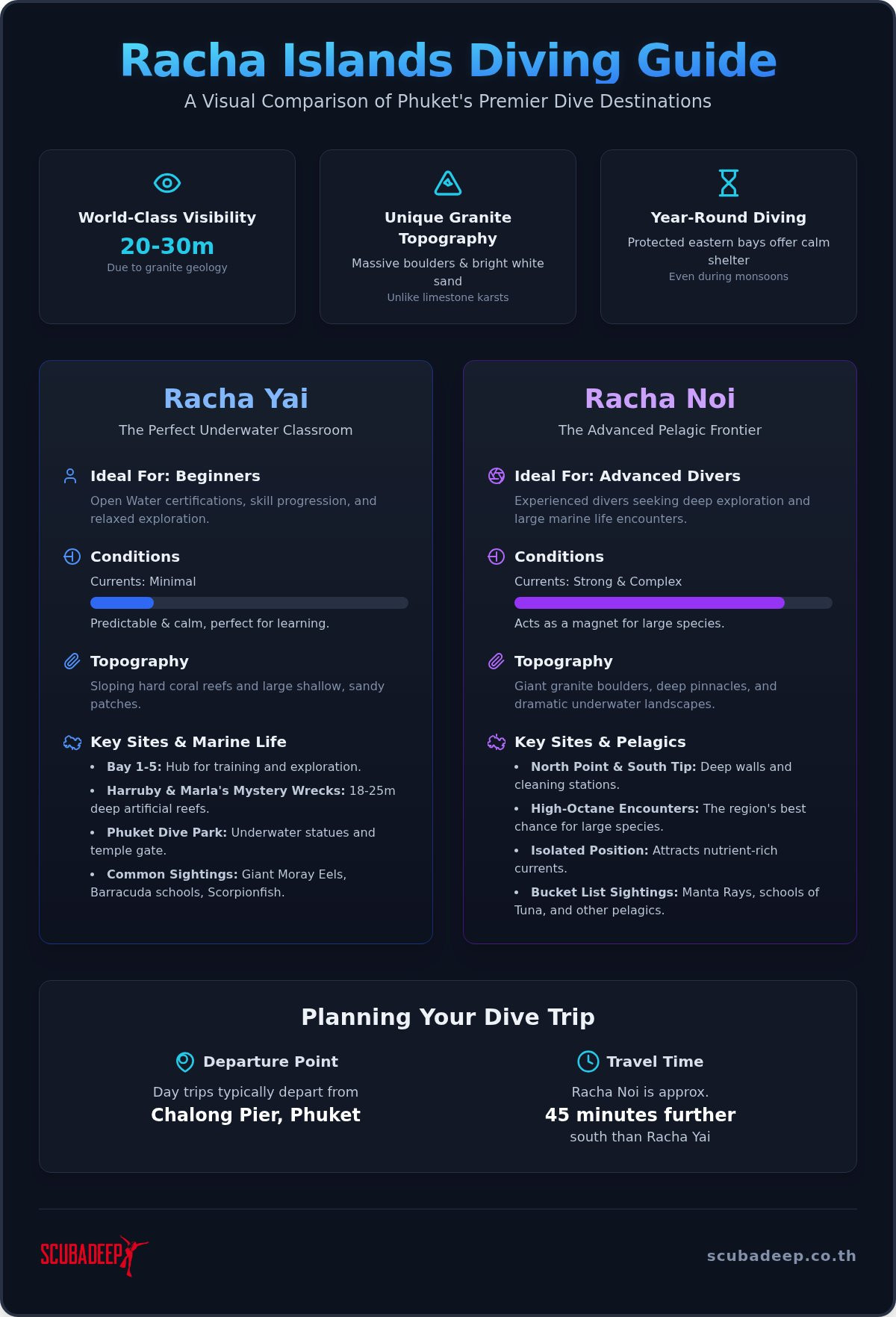
The Racha Islands, also known as the Raya Islands, represent Thailand’s premier granite-based dive destination. Unlike the limestone karsts found in Phi Phi, these islands are defined by massive granite boulders and bright white sandy bottoms. This unique geology serves a functional purpose for divers. The hard surfaces don't crumble easily, and the heavy sand settles quickly. This results in world-class visibility that frequently exceeds 20 to 30 meters. Racha Islands diving Phuket remains accessible throughout the year because both islands feature protected eastern bays. These natural harbors provide a sanctuary from western monsoons, ensuring calm conditions even when other regional sites are unreachable.
Racha Yai: The Perfect Underwater Classroom
Racha Yai is the larger of the two islands. It's characterized by sloping hard coral reefs and expansive shallow sandy patches. It's widely recognized as the region’s best environment for those starting their Open Water Course. The conditions here are remarkably predictable. Minimal currents allow students to focus on their essential skills without the stress of fighting moving water. You'll find a series of bays numbered one through five along the eastern coast. Each offers a safe haven for skill progression and confidence building. It's a structured environment where your comfort level grows alongside your technical competence.
Racha Noi: The Advanced Frontier
Travel 45 minutes further south and the topography shifts dramatically. Racha Noi is the "small island," but it offers much larger thrills for the experienced diver. The scenery here is dominated by giant granite boulders that mirror the dramatic landscapes of the Similan Islands. Because of its isolated position, the currents at Racha Noi are stronger and more complex. These moving waters act as a nutrient-rich magnet for large pelagic species. Seasoned divers visit Racha Noi for the chance to see Manta Rays or schools of tuna circling the deep pinnacles. It’s an adventurous frontier that rewards those with a desire for deeper exploration and more challenging conditions.
Whether you're taking your first breath underwater or you're a veteran looking for pelagic encounters, the Racha Islands offer a logical progression. The proximity to Phuket makes these islands a convenient yet world-class choice for a single-day excursion. You aren't just visiting a dive site; you're entering a specialized environment designed by nature to support every stage of a diver's journey.
Exploring the Best Dive Sites: From Shipwrecks to Pelagic Encounters
Racha Islands diving Phuket offers a curated selection of artificial and natural wonders that cater to diverse interests. While the clear water is a constant, the specific features of each site provide a unique "underwater playground" experience. Understanding where to go based on your certification level and interests ensures you don't miss the region's most iconic sightings. For those exploring scuba diving in Thailand, these islands represent a pinnacle of accessible yet high-quality marine environments.
Racha Yai Highlights: Bay 1 and the Sunken Treasures
Bay 1 is the most famous site on Racha Yai, acting as a hub for both training and exploration. It features several small shipwrecks, including the Harruby and Marla's Mystery, resting at depths between 18 and 25 meters. These wrecks have become vibrant artificial reefs, though they require a certain level of comfort with depth. You'll also find the quirky underwater motorbikes, which provide a popular photo opportunity. In Siam Bay, the "Phuket Dive Park" showcases mystical elephant statues and a temple gate. These structures were placed to encourage coral growth and provide a unique backdrop for divers. Common residents in these bays include:
- Giant Moray Eels hiding in the crevices of the granite boulders.
- Large Schools of Barracuda often circling the wreck sites.
- Scorpionfish expertly camouflaged against the hard coral reefs.
Racha Noi Highlights: North Point and South Tip
Racha Noi provides a more exclusive experience, characterized by deep walls and high-octane pelagic encounters. The South Tip is legendary among local experts as a primary cleaning station for Manta Rays. These graceful giants are most frequently spotted between February and April, though sightings occur throughout the year. The site features a deep plateau that drops off into the blue, requiring excellent buoyancy control. North Point offers stunning boulder formations and a high probability of seeing Blacktip Reef Sharks patrolling the shallows. This island is the ideal setting for those enrolled in an Advanced Diving Course Thailand, where current management and deep diving skills are put to the test. If you're ready to see the bigger side of the Andaman Sea, consider joining a Fun Dive Phuket excursion to these southern reaches.
Timing your visit is essential for those chasing "bucket list" species. While Whale Sharks are nomadic and can appear at any time, the peak season for pelagics coincides with the calmer seas of the late dry season. This period offers the best balance of visibility and marine activity, making it the prime window for high-energy encounters at Racha Noi's more exposed pinnacles. This seasonal approach ensures that Racha Islands diving Phuket remains a top-tier choice for enthusiasts year after year.
The Ideal Environment for Scuba Certification and Skill Progression
Racha Yai is globally recognized for its exceptional training conditions. The island's eastern bays offer a pool-like environment that is difficult to replicate at more exposed sites. For many, Racha Islands diving Phuket serves as the definitive starting point for a lifelong passion. The combination of shallow sandy patches and non-existent currents allows students to master buoyancy without external distractions. This structured setting ensures that every minute of your training is spent refining technical skills rather than fighting the elements.
Starting Your Journey: The Try Dive and Open Water Experience
First-time divers often face a psychological hurdle regarding water clarity and depth. Racha Yai removes these barriers. With visibility often reaching 20 meters, beginners can see the surface and their instructors clearly at all times. This visual reassurance is vital for the initial Open Water Course. It builds confidence during essential drills like mask clearing and regulator recovery. If you're feeling nervous, our Try Scuba Diving Phuket guide provides a detailed preparation checklist to ensure your first experience is seamless and rewarding.
Specialty Training: Wreck and Deep Diving
Skill progression doesn't end with a basic certification. Racha Yai’s wrecks, such as the Harruby, provide a controlled setting for a Wreck Diving Course. Here, you can practice navigation and basic penetration techniques in relatively shallow depths. As you advance, Racha Noi becomes the primary classroom for the Deep Dive Course. Its plateaus drop to 30 meters and beyond, offering the necessary environment for managing nitrogen narcosis and gas consumption under professional supervision. To maximize your time at these depths, we often recommend an Enriched Air Nitrox Course. This allows for longer bottom times when exploring the deeper pinnacles of the southern island. This logical transition from shallow bays to deep-water frontiers is what makes the Racha Islands a premier educational hub.
Ready to elevate your skills in the Andaman Sea? Sign up for your next certification course and learn from our elite instructors in Thailand's best underwater classroom.
Planning Your Racha Islands Dive Trip: Logistics and Professional Safety
Your day of Racha Islands diving Phuket starts with a convenient morning transfer to Chalong Pier. Most professional dive boats depart the pier by 8:30 AM. The journey to Racha Yai takes approximately 60 to 90 minutes, while reaching the more remote southern points of Racha Noi requires about 2 hours. This travel time is a perfect opportunity for a professional consultation with your guide. We believe a successful trip is built on meticulous preparation and clear communication, ensuring you feel empowered before you even hit the water.
What to Expect on the Boat
Once on the vessel, our team handles the technical logistics. You'll find your equipment professionally assembled and ready for your final inspection. We provide a comprehensive briefing using our Phuket Dive Sites Guide to ensure you're familiar with the specific underwater terrain and entry points. Between dives, you can enjoy fresh meals and comfortable relaxation areas during your surface intervals. If your last dive was more than six months ago, we require a Scuba Skills Review. This refresher ensures you're confident and safe before exploring the deeper granite plateaus.
Essential items for your day trip include:
- Digital or physical certification card and your logbook.
- Reef-friendly sunscreen to protect the delicate marine ecosystem.
- Swimwear, a towel, and a dry change of clothes for the return journey.
- Personal motion sickness medication if you're sensitive to sea conditions.
Safety and Conservation Protocols
Safety is our sober responsibility and the foundation of our premier service. We maintain small group ratios, typically four divers per professional guide, to ensure personalized attention and better underwater management. Every Scubadeep vessel carries emergency oxygen and advanced first aid kits as standard equipment. We also advocate for strict buoyancy control to prevent any contact with the hard coral reefs. This conservation-minded approach preserves the sites for future generations of explorers. Finally, please plan your travel itinerary to respect the 18-hour "No Fly" rule after your last dive. Diving with an elite mentor ensures that these technical details are managed for you, allowing you to focus entirely on the adventure of the Andaman Sea.
Elevate Your Underwater Journey in the Andaman Sea
The Racha Islands offer a unique progression from the calm, shallow bays of Racha Yai to the deep, current-swept pinnacles of Racha Noi. Whether you're seeking your first certification or chasing the thrill of Manta Ray encounters, Racha Islands diving Phuket provides the perfect backdrop for every level of experience. We've explored how these sites balance predictable training conditions with advanced "bucket list" adventures.
Choosing the right guide is the final step in ensuring a seamless experience. As an Elite Mentor in the region, Scubadeep provides a sophisticated blend of professional authority and welcoming hospitality. We prioritize your personal journey through small group sizes and the expertise of our multilingual guides. Our commitment to safety and high-level industry standards means you can focus entirely on the beauty of the Andaman Sea.
Ready to take the next step in your diving career? Book your Racha Islands Fun Dive or Course with Scubadeep today and discover why we're the premier choice for discerning divers in 2026. We look forward to guiding you through the hidden wonders of these twin islands.
Frequently Asked Questions
Is Racha Islands diving suitable for absolute beginners?
Yes, Racha Islands diving Phuket is considered the premier location for absolute beginners. Racha Yai offers shallow, sandy bays with minimal currents, creating a pool-like environment that is perfect for those taking a Try Dive or starting their Open Water Course. The high visibility, often reaching 20 meters, provides a reassuring atmosphere for first-time divers. These predictable conditions allow you to focus on mastering basic skills under the guidance of a professional mentor.
What is the best time of year to dive the Racha Islands?
You can enjoy Racha Islands diving Phuket year-round because the protected eastern bays offer shelter from the monsoon winds. The peak season occurs between November and April when the sea is calmest and visibility is at its highest. During this period, water clarity often exceeds 25 meters. If you are interested in pelagic sightings at Racha Noi, the window between February and April is particularly productive for encountering larger marine species in the region.
Can I see Manta Rays at Racha Yai or Racha Noi?
Manta Rays are primarily seen at Racha Noi, specifically at the South Tip and North Point pinnacles. While Racha Yai is better known for its shipwrecks and hard coral reefs, the deep-water plateaus at Racha Noi act as cleaning stations for these graceful pelagics. Sightings are most frequent during the late dry season, but these nomadic giants can appear at any time. Experienced divers often join a Fun Dive Phuket trip specifically to visit these southern frontiers.
How deep are the dive sites at the Racha Islands?
The depth varies significantly between the two islands to accommodate different skill levels. At Racha Yai, the average depth in the training bays is between 10 and 15 meters, while the shipwrecks sit between 18 and 25 meters. Racha Noi offers more dramatic topography with depths reaching 30 meters and beyond. This makes Racha Noi an ideal location for those enrolled in a Deep Dive Course or an Advanced Open Water Course where deeper exploration is required.
How long is the boat trip from Phuket to the Racha Islands?
The boat trip from Chalong Pier to Racha Yai typically takes approximately 60 to 90 minutes depending on the vessel type and sea conditions. If your itinerary includes Racha Noi, expect a total travel time of about 2 hours to reach the southern tip. These surface intervals are utilized for equipment setup and professional briefings. The journey offers a comfortable transition from the mainland to the clear, blue waters of the Andaman Sea for a full day of exploration.
Do I need a certification to dive at Racha Noi?
Racha Noi is generally recommended for certified divers due to its deeper plateaus and stronger currents. While absolute beginners are better suited for the calm bays of Racha Yai, seasoned divers can explore the more challenging terrain of the southern island. If you are currently uncertified, you can start with a Try Dive at Racha Yai before progressing toward your certification. Advanced divers often use Racha Noi to practice skills for their Rescue Diver or specialty training programs.